Key insights
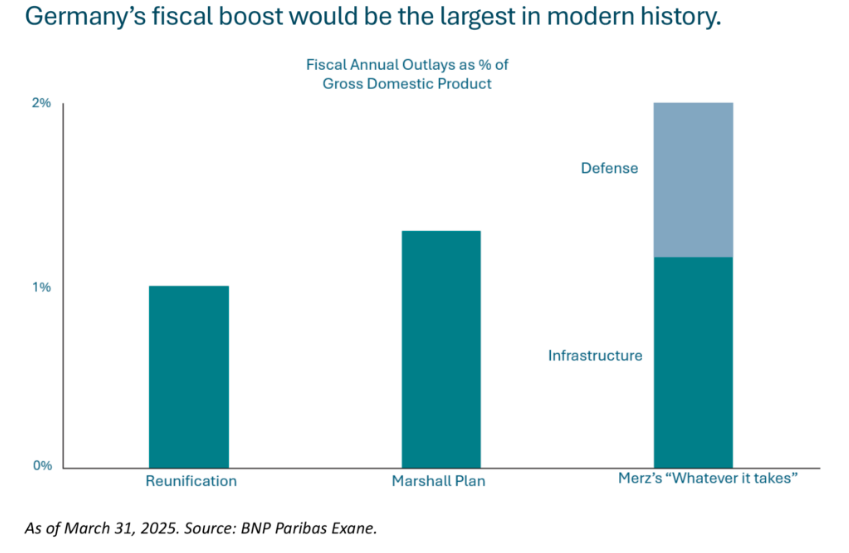
- Europe, led by an unshackled Germany, can stimulate economic growth with fiscal spending.
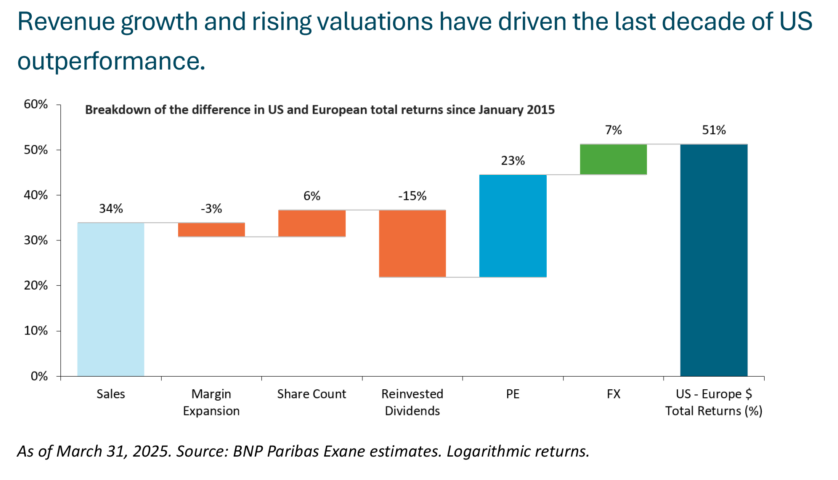
- Policies that impede US revenue growth should pressure the valuation premium of US versus non-US stocks.
- While tariff pressure looms, we believe cyclical sectors offer some of the most attractive investment opportunities.
Prolonged punitive and widespread tariffs—especially with retaliation—threaten global economic growth. As economies weaken, cyclical sectors tend to underperform, presenting stock-specific opportunities for the patient value investor. In our view, US government stimulus has reached its limits and cannot offset tariff-related headwinds. We believe an American manufacturing renaissance in low value goods (textiles, electronics, toys, etc.) would take many years to materialize, if it occurs at all. Fifty years of complex, efficient global supply chains cannot change overnight.
While the US experiments with reordering the world’s trading system, uncertainty rises and volatility ensues. We are reminded of the delicate balance between safeguarding domestic interests and promoting a cooperative global trading system.
For Causeway International and Global Value equity portfolios, this trade war brings both opportunities and risks. We are spending more time than usual scenario planning, seeking to better understand first and second order effects of tariffs, their implications for various industries, and the portfolios’ exposure to company- and industry-specific risks.
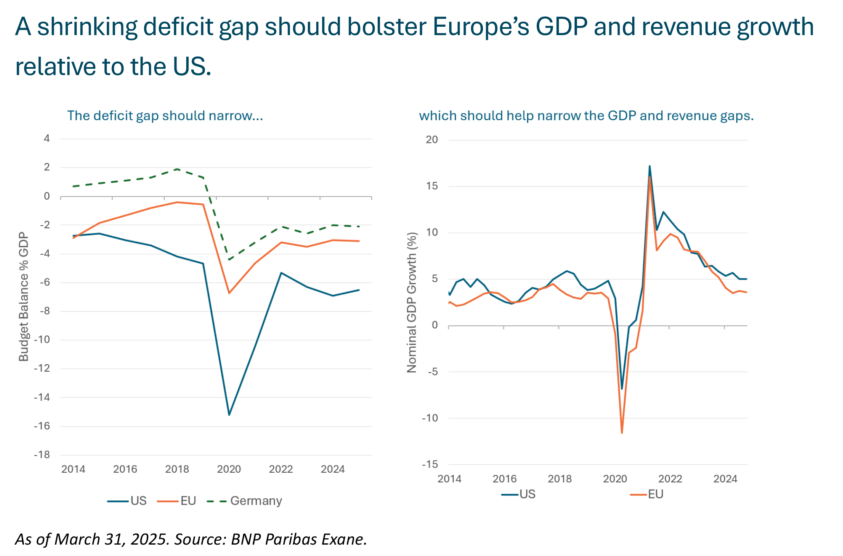
In the next ninety days, the Trump administration may negotiate the removal of the most problematic non-tariff barriers to trade, then reward compliant trading partners with favorable deals. At the same time, we believe if US policymakers fail to lower deficits and rein in government spending stocks may suffer further. An unruly US Treasury market and rising bond yields could damage US growth and spark a credit crisis. We suggest that higher deficit spending has contributed significantly to US gross domestic product growth and stock market multiple expansion; unwinding that support may have the opposite effect.