Stocks have been interesting, and one question we have had here at the FRED Report is whether the January rally is a sea change in the markets or a flash in the pan. Our response is that the January Effect is alive and well but is unlikely to continue through the rest of the year. Let’s discuss the January Effect.
The classic January Effect methodology, which we use every year to buy beaten down stocks, is that some stocks fall into the end of the year simply because they are being sold for tax reasons, and then rebound in the first month of the new year. Lately, the idea that these stocks should be purchased in October, as institutions rebalance portfolios at that time and some stocks fall, has taken hold. Sometime this does happen but our analysis suggests that the classic methodology is more effective. We should note one additional thing that can make this work better, is that the closer to the end of the year a stock falls, the better the rebound can be. We had a classic example on our 2023 list – TSLA, that dropped sharply right at yearend.
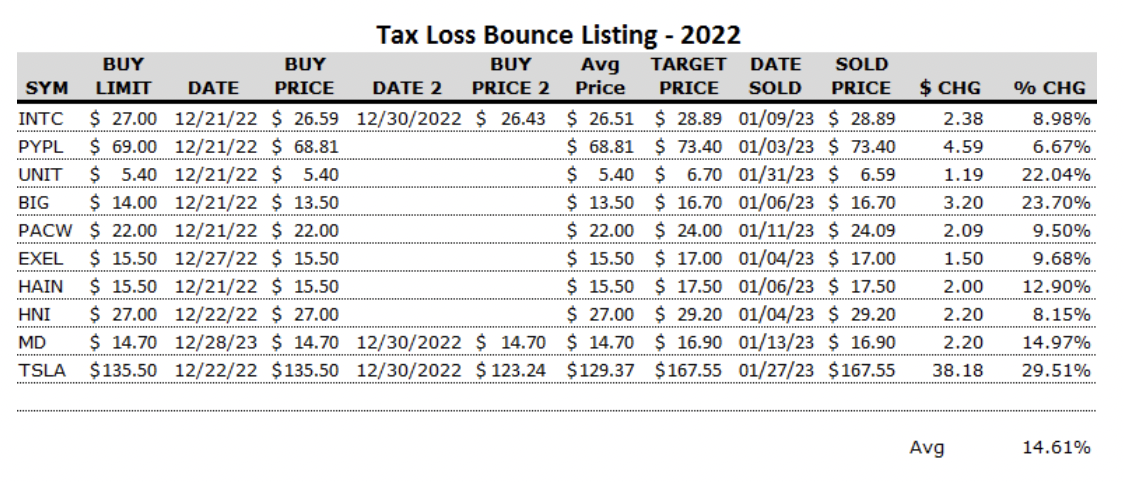
We show the results of our tax bounce list, below. TSLA stock actually made the low in the first couple of days in January. On our list, we bought some stocks when technical indicators suggested a market low in mid December was likely, and then added positions on the last trading day of 2022, per our usual Tax Loss strategy. Note the reason that some stocks do not show a second buy price right at the end of the year is that they were trading above the buy limit at that time. Interested readers can check the performance of stocks on our list, which traded very well this year, and look at their prices at the end of October, and see which methodology worked better for these names. Obviously, there is room for more than one strategy when it comes to buying beaten down names. The methodology we use has stood the test of time and produced consistent results. See our list, below.