Investor sentiment continued to improve in November on greater optimism for a U.S.−China deal and some signs of improvement in global growth. While news headlines describing U.S.−China relations were mixed at times, the overall tone for phase-one negotiations was relatively positive. Fear of an imminent recession – which had escalated during the summer over trade and growth concerns – ostensibly subsided, and the uptick in sentiment led to a “risk-on” environment; developed market equities posted positive returns and U.S. equity indices set new all-time highs. Corporate credit spreads tightened while developed market sovereign bond yields rose. Several large acquisitions were also announced, reflecting the better tone: Financial services company Charles Schwab acquired TD Ameritrade, French luxury conglomerate LVMH purchased Tiffany & Company, and Swiss pharmaceutical company Novartis acquired The Medicines Company. Not all risk markets finished higher, however – notably, emerging market equities and debt were down, mainly due to civil unrest across a number of countries.
Amid tentative signs of a stabilizing macroeconomic environment, central banks generally moved to a wait-and-see stance. Global economic data showed some resiliency, with flash manufacturing purchasing managers’ indices (PMIs) strengthening in the U.S., eurozone, and Japan. Evidence that the U.S. economy remained on solid footing was also reinforced by strong job gains and retail sales, along with an upward revision to Q3 GDP growth (mainly due to robust inventory investment). Not all data were positive: Consumer confidence slipped, and certain measures of core inflation remained subdued – particularly the Federal Reserve’s preferred PCE (personal consumption expenditures) measure. Minutes from the most recent Fed meeting indicated that while officials still recognized elevated risk, most saw interest rates as “well calibrated,” and Chairman Jerome Powell later described the economy as a glass “more than half full.” Similarly, Bank of Japan Governor Haruhiko Kuroda said he saw no need to expand monetary stimulus. In Europe, Christine Lagarde delivered her first speech as European Central Bank (ECB) president, emphasizing “a new European policy mix” that would require increased public investment by eurozone governments. Meanwhile, the Bank of England (BOE) held rates steady, and noted its expectation for a pickup in growth should Prime Minister Boris Johnson’s Brexit deal be passed after the general election in December.
Civil unrest and political uncertainty continued in various regions across the world. Signs of discontent persisted in Iraq, Chile, and Lebanon – among other countries – and widespread anti-government protests began in Iran. Protests in Hong Kong marked their sixth month, with pro-democracy victories, largely symbolic, in district council elections. Of note, U.S. President Donald Trump signed two pro-democracy Hong Kong bills. While a potential source of tension, the legislation did not appear to derail ongoing trade negotiations between the U.S. and China. In the U.K., campaigning continued ahead of the 12 December election, with polls indicating a Conservative majority as the most likely outcome. In southern Europe, Spain’s elections yet again reached a stalemate as current Prime Minister Pedro Sánchez was unsuccessful in forming a government. Across the Mediterranean, Israel also failed to form a coalition, and current Prime Minister Benjamin Netanyahu was formally indicted on charges including bribery and fraud.
Image Pop Up
U-turn An uptick in manufacturing PMIs during November for several key global markets lent credence to the idea of a potential bottoming in global growth, even as other economic data were mixed. Several factors likely supported the marginal boost – including easier financial conditions (spurred by more accommodative policies around the globe) and nascent signs of both a U.S.−China trade deal and Brexit resolution. The apparent turn in data was particularly notable in the eurozone (Germany and France), highlighting that the improving business sentiment was more marked in regions generally susceptible to trade tensions and external growth conditions.
In the Markets
EQUITIES
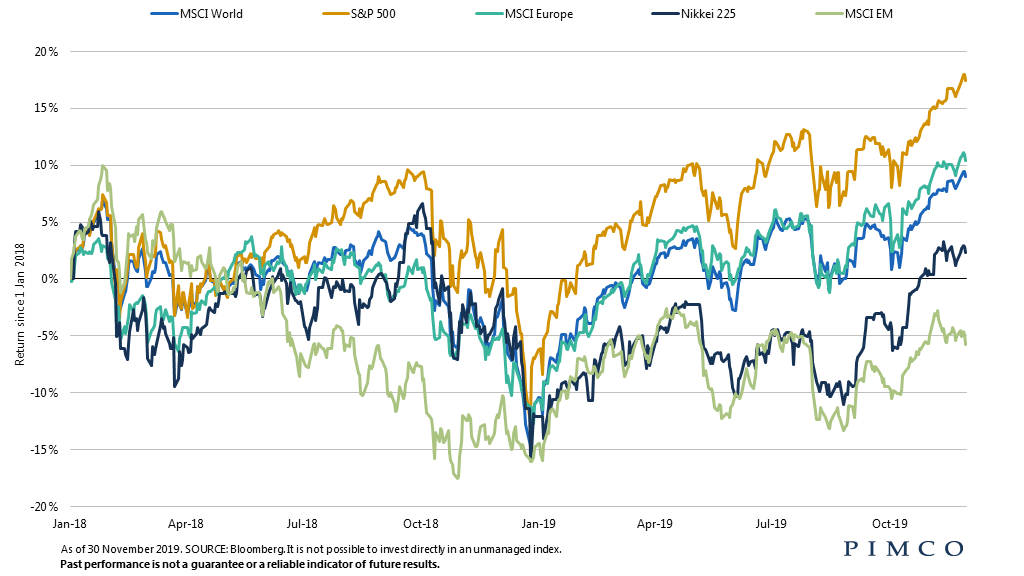
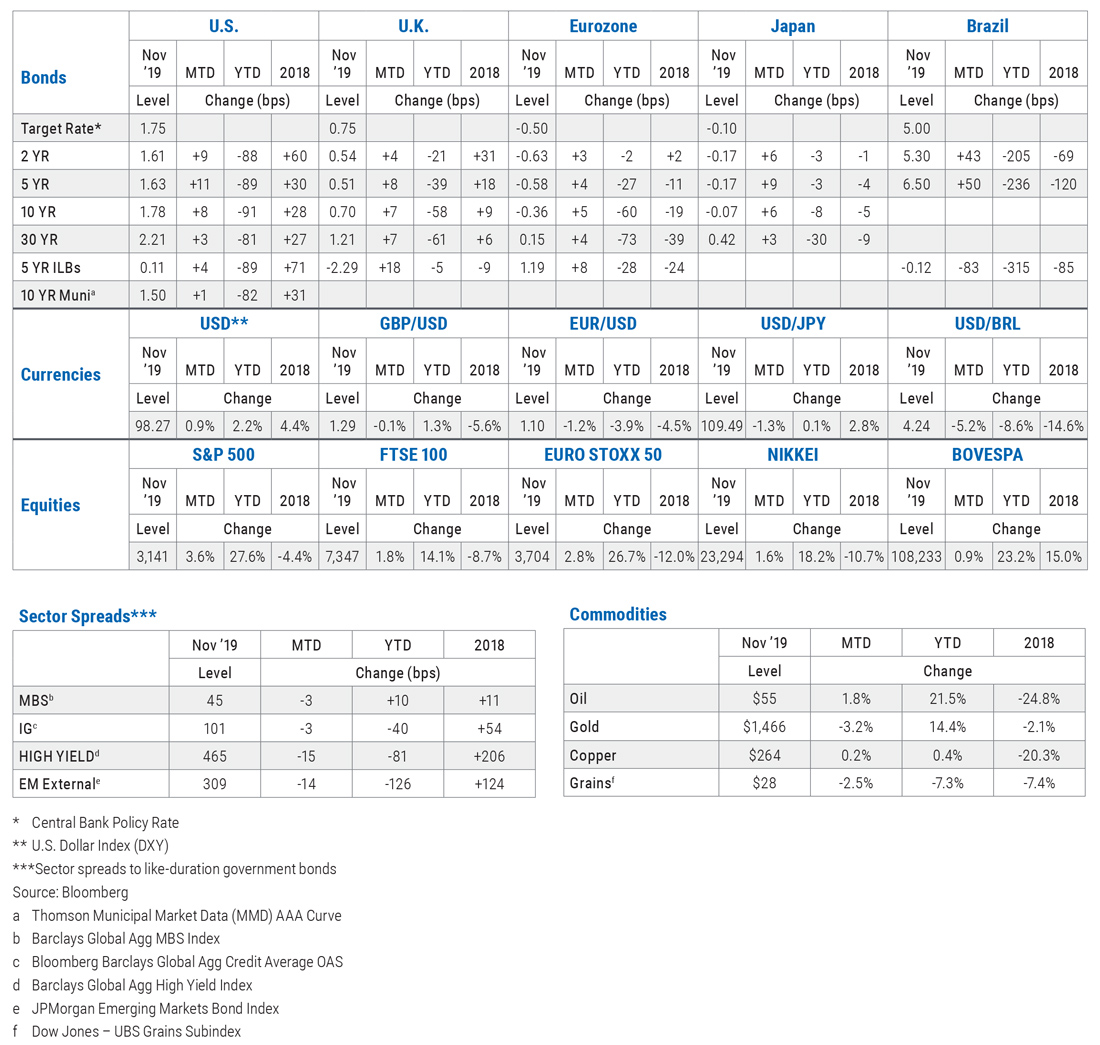
Developed market stocks1 increased 2.8% in November as global economic data improved and fears of a global slowdown began to abate. U.S. equities2 climbed 3.6%, the largest one-month gain since June while recession fears dissipated and the outlook for U.S.-China trade talks improved. European equities3 gained 2.7% on improving PMIs (purchasing manager indices), rising eurozone retail sales, and a rebound in the services sector. Japanese equities4 returned 1.6%, supported by a weakening yen and improving sentiment surrounding U.S.−China trade.
Emerging market equities5 fell 0.1% over the month amid idiosyncratic political unrest and widespread protests. In Brazil6, stocks rose 1.0%; while progress on social security reform and dovish sentiment from central banks in the region have supported Brazilian markets, mass protests in Latin America heightened fears that economic reforms would be delayed. In China, local equities7 fell 1.9% despite progress in trade talks and modest rate cuts by the People’s Bank of China, as political unrest in Hong Kong escalated. In India8, stocks rose 1.7%, buoyed by positive trade sentiment even as GDP reports showed signs of slowing economic growth. Russian equities9 rose 1.4% to an all-time high with oil output and Brent crude prices rising over the month.
Image Pop Up
DEVELOPED MARKET DEBT
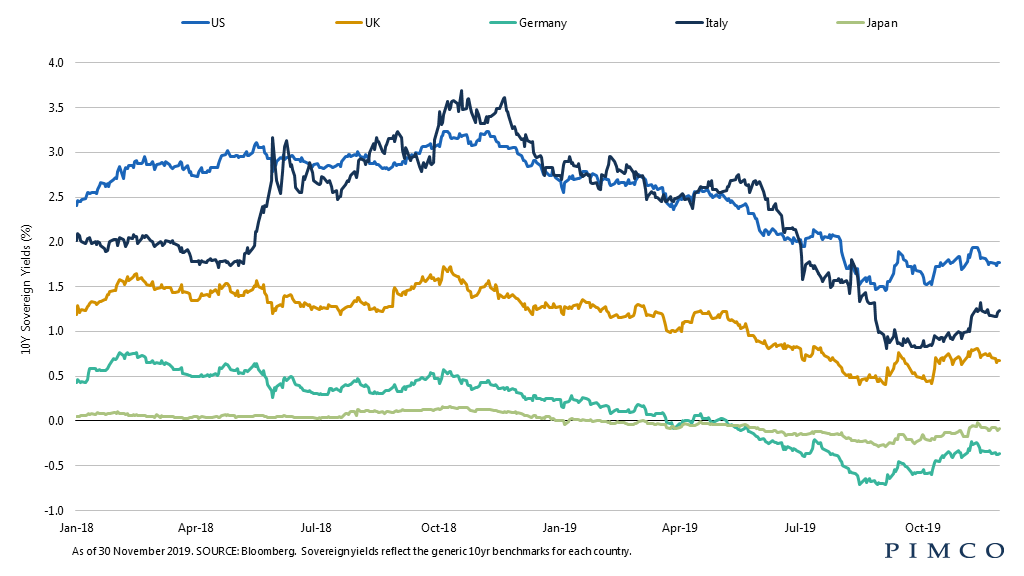
Developed market yields broadly rose at the start of the month as renewed optimism over U.S−China trade talks contributed to robust risk sentiment. However, the move higher in yields was partially reversed in the second half of the month after disappointing economic data releases. In the U.S, the 10-year Treasury yield reached a monthly high of 1.94% on 8 November before falling back to 1.78% by the end of the month, 8 basis points (bps) higher than where it started. Similar moves were seen across other developed regions: In Europe, 10-year German bund and U.K. gilt yields ended the month 5 bps and 7 bps higher at −0.36% and 0.70%, respectively. Meanwhile, in Japan, the 10-year government bond yield ended 6 bps higher at −0.07%.
Image Pop Up
INFLATION-LINKED DEBT
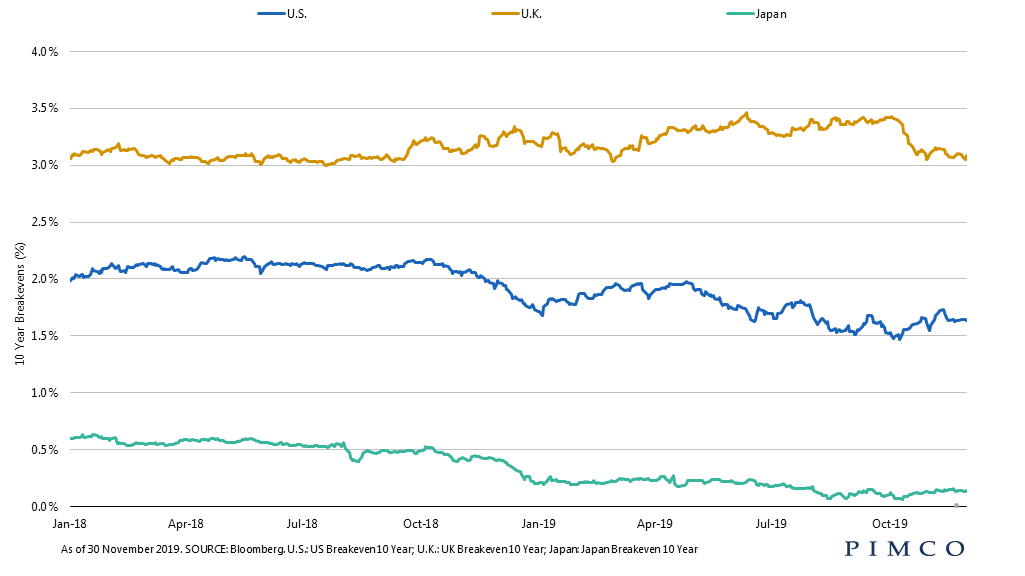
Global inflation-linked bonds (ILBs) posted negative absolute returns overall in November. Breakeven inflation (BEI) expectations were mixed across regions, reflecting varying risk sentiment and inflation dynamics. In the U.S., Treasury Inflation-Protected Securities (TIPS) posted positive absolute returns and outperformed nominal Treasuries. U.S. breakevens were supported by risk-on sentiment on the news that the U.S. and China were moving closer to a trade agreement, but negotiations hit another snag over tariff rollbacks before month-end. U.S. headline and core CPI for October came in at 1.8% and 2.3% year over year, respectively. Outside the U.S., U.K. breakevens significantly underperformed, led by short-term bonds, on the back of a rally in the British pound following constructive Brexit news.
Image Pop Up
CREDIT
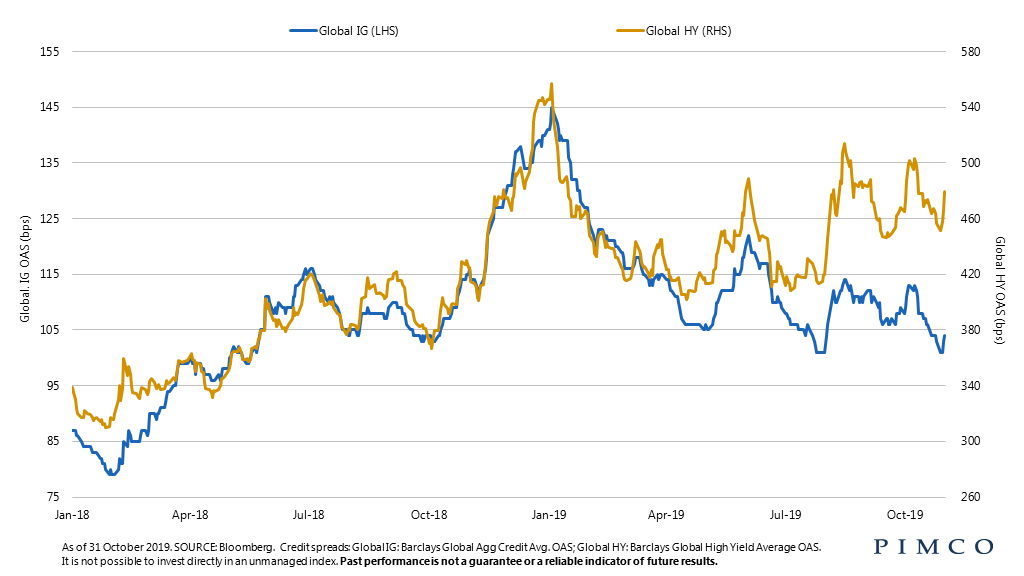
Global investment-grade-credit10 spreads tightened 4 bps in November, and the sector returned 0.12% for the month, outperforming like-duration global government bonds by 0.39%. News of progress in U.S.−China trade negotiations and reduced concern around global growth given improved manufacturing and consumer spending data drove the modest narrowing in spreads as well as a moderate outperformance in cyclical industries.
Global high yield bond11 spreads tightened 15 bps in November, and the sector returned 0.46% for the month, outperforming like-duration Treasuries by 0.62%. Improving prospects for a phase-one U.S.−China trade deal led to modest gains in high yield bonds overall, despite the heaviest primary activity since September 2017.The higher-quality BB segment returned 0.53% for the month, but the CCC segment returned −0.60%.
Image Pop Up
EMERGING MARKET DEBT
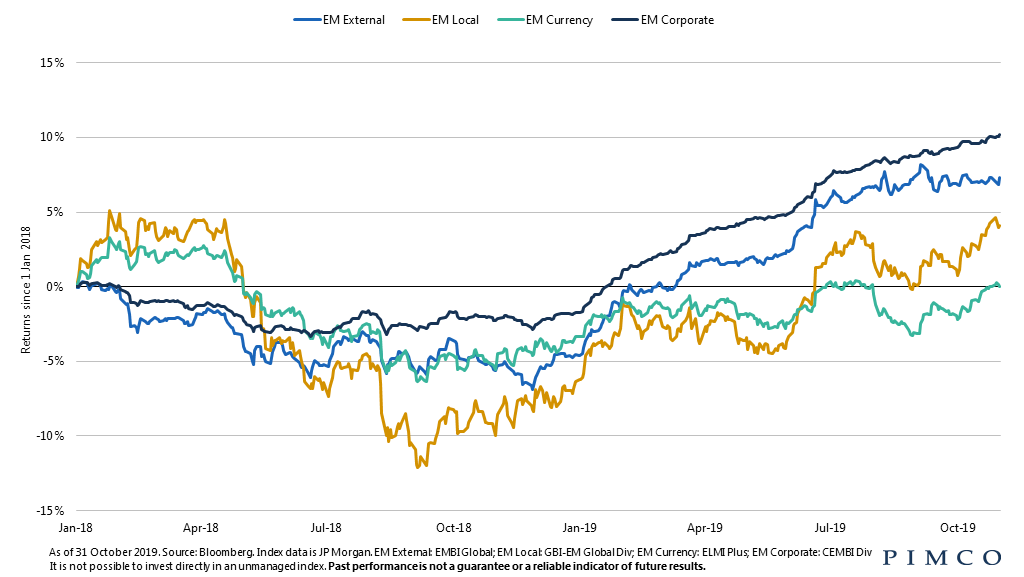
Emerging market (EM) debt broadly posted negative performance in November. External debt12 returned −0.16, driven primarily by an 8-bp rise in the underlying U.S. Treasury yield,13 which outweighed a 14-bp tightening in spread as risk sentiment generally improved. Local debt14 posted weaker returns of −1.82% as local rates rose modestly, EM risk sentiment turned more mixed, and currencies depreciated against a strengthening U.S. dollar. EM investor sentiment was more mixed than the broader risk-on trend during the month: Optimism around a potential phase-one trade deal conflicted with concern around the civil unrest in several EM countries, notably Lebanon and Chile.
Image Pop Up
MORTGAGE-BACKED SECURITIES
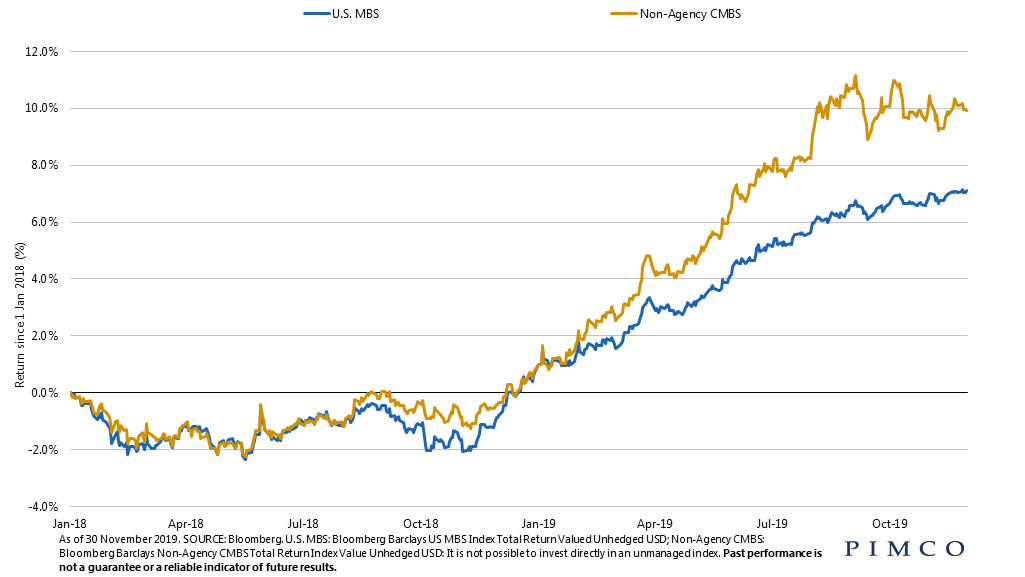
Agency MBS15 returned 0.08%, outperforming like-duration Treasuries by 19 bps. November was the 14th month of the Federal Reserve’s balance-sheet unwinding: The Fed has cumulatively sold $360 billion in agency MBS and its monthly runoff exceeded the $20-billion cap again, which allowed the Fed to reinvest an additional $8 billion back into agency MBS in November. The modest stabilization in mortgage rates over the month was enough to support the continued recovery in MBS performance. Higher coupons underperformed lower coupons, 30-year MBS was mixed versus 15-year, and Ginnie Mae MBS underperformed Fannie Mae. Gross MBS issuance remained robust at $170 billion for November, a 2% increase versus October. Prepayment speeds, meanwhile, increased 10% in October (most recent data available), which was in line with expectations. Non-agency residential MBS spreads remained unchanged in November, while non-agency commercial MBS returned −0.45%, underperforming like-duration Treasuries by 12 bps.
Image Pop Up
MUNICIPAL BONDS
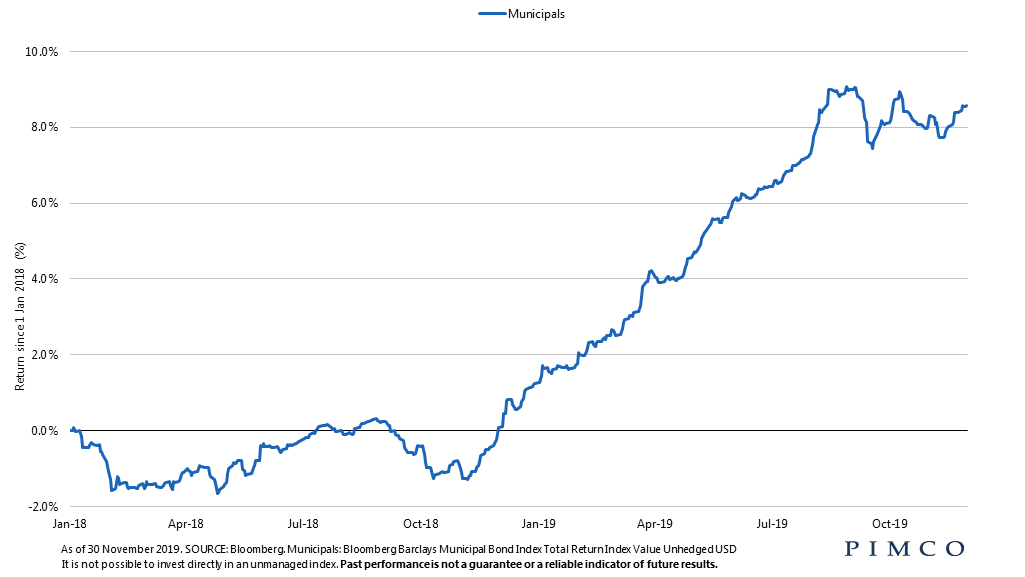
The Bloomberg Barclays Municipal Bond Index gained 0.25% in November, bringing the total return to 7.21% for the year, as demand for munis remained very strong. Munis outperformed the U.S. Treasury index over the month, causing municipal/Treasury yield ratios to decrease across the curve. High yield munis outperformed investment grade munis over the month, returning 0.39% in November and bringing the year-to-date return to 10.35%. High yield performance was driven primarily by positive returns in the transportation, resource recovery, and industrial development sectors. Total muni supply was $44 billion in November, down 20% from October, but up 100% year over year, and the trend toward rising taxable issuance continued. Muni fund flows remained robust, marking 47 straight positive weeks: Investment inflows totaled $9 billion in November, bringing year-to-date inflows to $84.1 billion, which surpassed the record high set in 2009 ($78.6 billion).
Image Pop Up
CURRENCIES
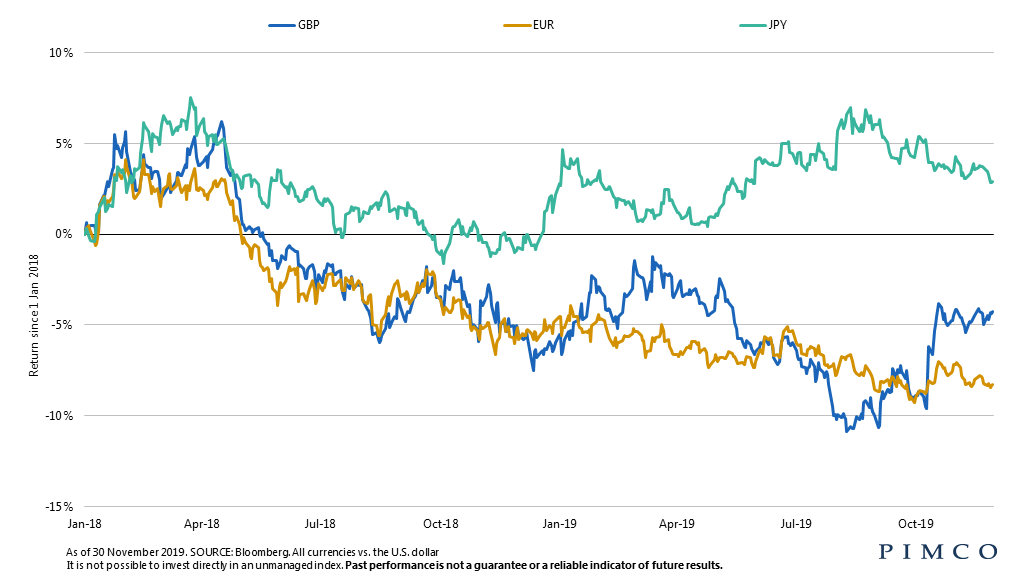
The U.S. dollar ended the month stronger (+0.9% based on DXY) than its developed-market counterparts, as U.S. economic data turned more positive and caused expectations of a rate cut in December to decline. Reflecting this dollar strength in combination with lower-than-expected eurozone PMIs, the euro weakened 1.2% versus the dollar. Similarly, the British pound weakened 0.1% versus the dollar, although dollar strength was partially offset by increasing expectations of a Conservative majority in the December election, a result that would likely lead to passage of a Brexit agreement by Parliament. The Japanese yen, a traditional “safe-haven” currency, weakened 1.3% versus the dollar as risk sentiment improved on the growing expectation of a U.S.-China phase-one trade deal and positive U.S. economic data.
Image Pop Up
COMMODITIES
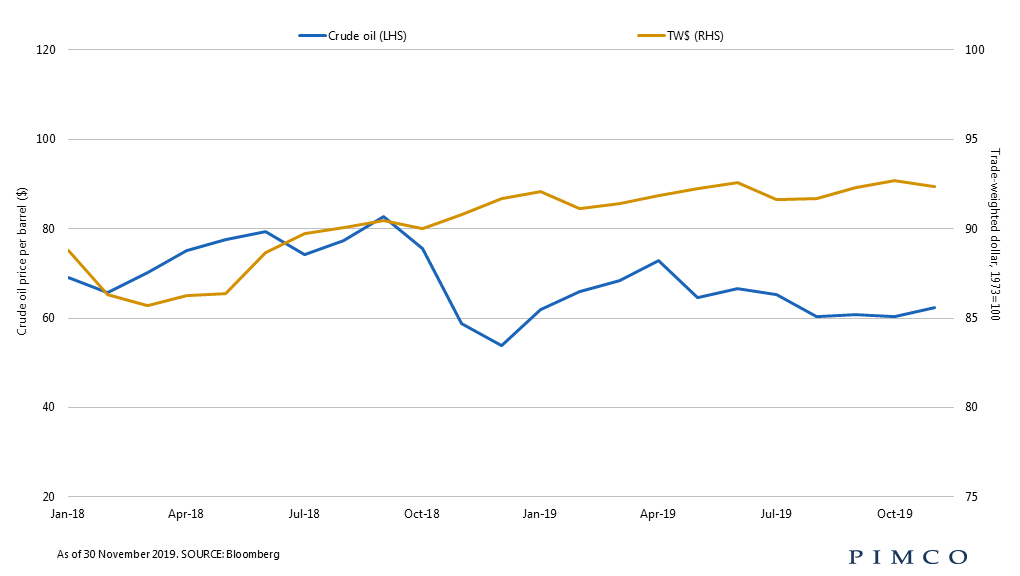
Commodity returns were negative in November. Oil prices ended higher on optimism around a potential U.S.−China trade deal and an extension of supply cuts by OPEC+; prices had paired some of their gains into month-end, however, amid renewed concern over trade and production deals and a report from the Energy Information Administration (EIA) showing a surge in U.S. production. Natural gas prices fell on forecasts for warmer weather. Agricultural commodities were flat over the month. Wheat rallied on fears over tightening supplies, while soybean and corn prices – which were largely dominated by trade-related headlines – posted losses. Base metals moved sharply lower, led by zinc, lead, and nickel. The latter came under pressure as the market refocused on poor demand and declining stainless steel prices following an impressive year-to-date rally. Precious metals also declined, mainly on the back of improving risk sentiment.
Image Pop UpImage Pop Up 1234567S8101112131415
Outlook
Based on PIMCO’s Cyclical Outlook from September 2019. The outlook will be updated next month following our cyclical forum in December.
We believe the global economy is facing a low-growth “window of weakness” as ongoing trade tensions and heightened political uncertainty continue to act as a drag on global trade, manufacturing activity, and business investment. In our baseline forecast, the low-growth period of vulnerability – with trade, monetary, and fiscal policy acting as swing factors – gives way to a moderate recovery in U.S. and global growth over the course of 2020.
In the U.S., we continue to expect growth to slow to 1.25%–1.75% in 2020 from a peak of 3.2% in the second quarter of 2018. Slower global growth and elevated trade tensions are expected to depress investment and export growth, while slower business output and lower profit growth slow labor markets, weighing on consumption. Core inflation is likely to firm somewhat to the 2.25%−2.75% range due to the recent tariffs on Chinese goods, though it is likely to moderate in later 2020. After cutting rates three times in as many meetings, the Federal Reserve has indicated that it may moderate or pause rate increases. Still, more accommodation may be in the offing in the quarters ahead.
For the eurozone, we see the continuation of a 1% growth, 1% inflation economy. Ongoing trade tensions are expected to exert a significant drag on growth, somewhat offset by supportive domestic conditions, including easy financial conditions, modest fiscal stimulus, and remaining pent-up demand. Core inflation could rise a bit over the next year in response to rising wages, but weak growth suggests that margin pressure on businesses will continue, limiting the pass-through of higher labor costs. While the European Central Bank may cut the policy rate a little further, we expect the focus to remain on forward guidance, targeted longer-term refinancing operations (TLTROs), and asset purchases.
In the U.K., we expect real growth in the range of 0.75%–1.25% in 2020, modestly below trend. We anticipate an orderly Brexit following the U.K. elections, likely through an amended withdrawal agreement. However, we see headwinds from weak global trade, Brexit-related uncertainty, and possible disturbances in the event of a no-deal exit weighing on growth. We expect core CPI inflation to remain stable at or close to the 2% target. While wage growth has picked up, we think firms are likely to absorb higher labor costs. The Bank of England will likely keep its policy rate unchanged at 0.75%, but we expect a cut in the event of a no-deal exit.
Japan’s GDP growth is expected to slow to a 0.25%–0.75% range in 2020 from an estimated 1.1% this year. Although we expect domestic demand to remain resilient thanks to a tight labor market and anticipated fiscal accommodation, the balance of risk remains on the downside due to external factors. Core inflation is expected to remain low at 0.5%–1%, with most of the impact from the consumption tax hike offset by lower mobile phone charges and free nursery education. The hurdle for deeper negative interest rates remains high, but there is clear appetite for fiscal stimulus from both the Bank of Japan and the government.
In China, we see growth slowing in 2020 to a 5.0%‒6.0% range from an estimated 6.1% in 2019 due to the trade conflict, rising unemployment, weakening consumption, and sluggish business investment. We expect fiscal stimulus of around 1% of GDP, likely front-loaded in the first quarter of 2020. Inflation should remain benign at 1.5%–2.5%, and we expect the People’s Bank of China to cut rates in addition to reducing bank reserve requirement ratios. We also expect further moderate yuan depreciation against the U.S. dollar to cushion the trade war’s impact on manufacturing.
DISCLOSURES
A “safe haven” currency is a currency perceived to be low risk due to the stability of the issuing government and the strength of the underlying economy. All investments contain risk and may lose value.
Statements concerning financial market trends or portfolio strategies are based on current market conditions, which will fluctuate. There is no guarantee that these investment strategies will work under all market conditions or are suitable for all investors and each investor should evaluate their ability to invest for the long term, especially during periods of downturn in the market. Outlook and strategies are subject to change without notice.
Investing in the bond market is subject to risks, including market, interest rate, issuer, credit, inflation risk, and liquidity risk. The value of most bonds and bond strategies are impacted by changes in interest rates. Bonds and bond strategies with longer durations tend to be more sensitive and volatile than those with shorter durations; bond prices generally fall as interest rates rise, and low interest rate environments increase this risk. Reductions in bond counterparty capacity may contribute to decreased market liquidity and increased price volatility. Bond investments may be worth more or less than the original cost when redeemed. Commodities contain heightened risk, including market, political, regulatory and natural conditions, and may not be suitable for all investors. Equities may decline in value due to both real and perceived general market, economic and industry conditions. Investing in foreign-denominated and/or -domiciled securities may involve heightened risk due to currency fluctuations, and economic and political risks, which may be enhanced in emerging markets. Mortgage- and asset-backed securities may be sensitive to changes in interest rates, subject to early repayment risk, and while generally supported by a government, government-agency or private guarantor, there is no assurance that the guarantor will meet its obligations. High yield, lower-rated securities involve greater risk than higher-rated securities; portfolios that invest in them may be subject to greater levels of credit and liquidity risk than portfolios that do not. Inflation-linked bonds (ILBs) issued by a government are fixed income securities whose principal value is periodically adjusted according to the rate of inflation; ILBs decline in value when real interest rates rise.
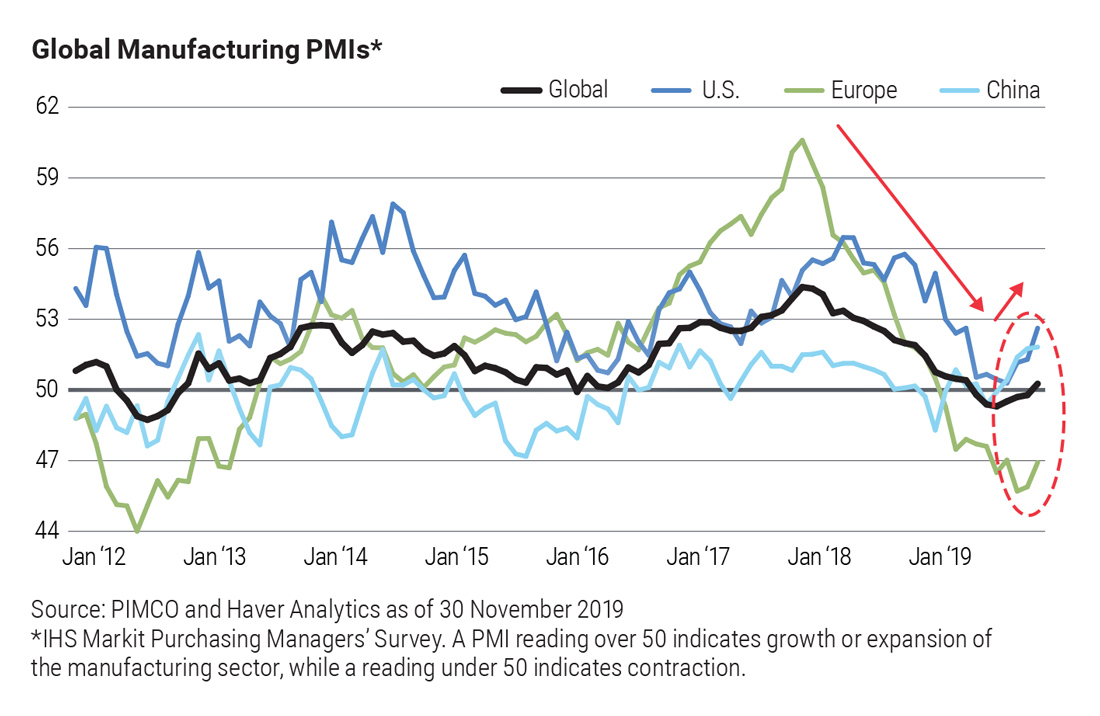 Image Pop Up