It turns out, the biggest financial victim of President Donald Trump’s decision to strike Iran is not the S&P 500, but equity markets across North Asia.
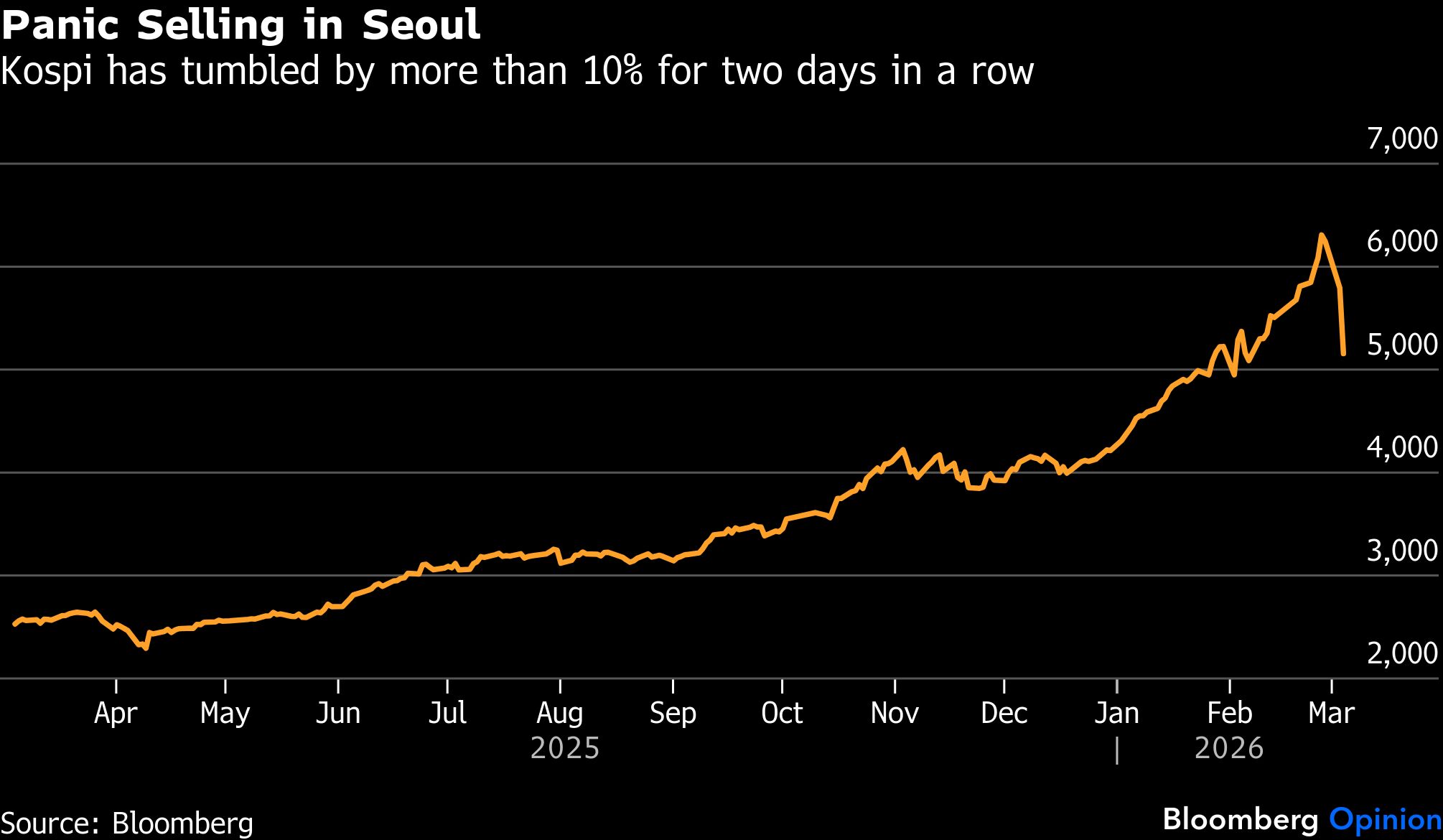
Panic selling was sweeping across Hong Kong, Seoul and Tokyo on Wednesday. South Korea’s benchmark Kospi index headed for its biggest two-day drop since 2008.
The selloff may have come as somewhat of a surprise for investors. North Asia is known for its dependence on oil and natural gas imports, but if we are talking about an economic meltdown, the Iran conflict may be pushing Europe into an energy crisis first. In addition, unless the closure of the Strait of Hormuz gets prolonged, economies in the region have got buffers thanks to their national reserves. Japan has an estimated 254 days of oil stockpile; China’s domestic gas holdings are worth about an entire year of its Gulf imports.
So why are North Asian markets so vulnerable?
Often, steep market declines have a lot more to do with flows than fundamentals. Prior to the Iranian crisis, hot money was flooding into Asia, looking for semiconductor and hard tech plays as global investors rotated out of software companies into AI infrastructure. The broadening of the AI trade laid the foundation for this week’s rout.
Indeed, until now, the investment narratives were all for Asian hard tech. Samsung Electronics Co. and SK Hynix Inc. were believed to have entered a yearslong super cycle, after both companies said that the supply crunch in memory chips would continue until 2027. Meanwhile, Taiwan Semiconductor Manufacturing Co.’s strong earnings bolstered the case that US hyperscalers will keep on spending, ensuring windfalls for Asian suppliers.
No surprise that hot money chased after the few winners. In the US, the $16 billion iShares MSCI South Korea ETF recorded over $1.2 billion in inflows in the week before the Middle East turmoil, the most in the fund’s 25-year history. In South Korea, retail investors, who for decades skirted the blue-chip Kospi index, went on a buying spree. The number of active accounts and margin loans both hit record highs.
In other words, the Asian AI infrastructure trade was getting crowded.
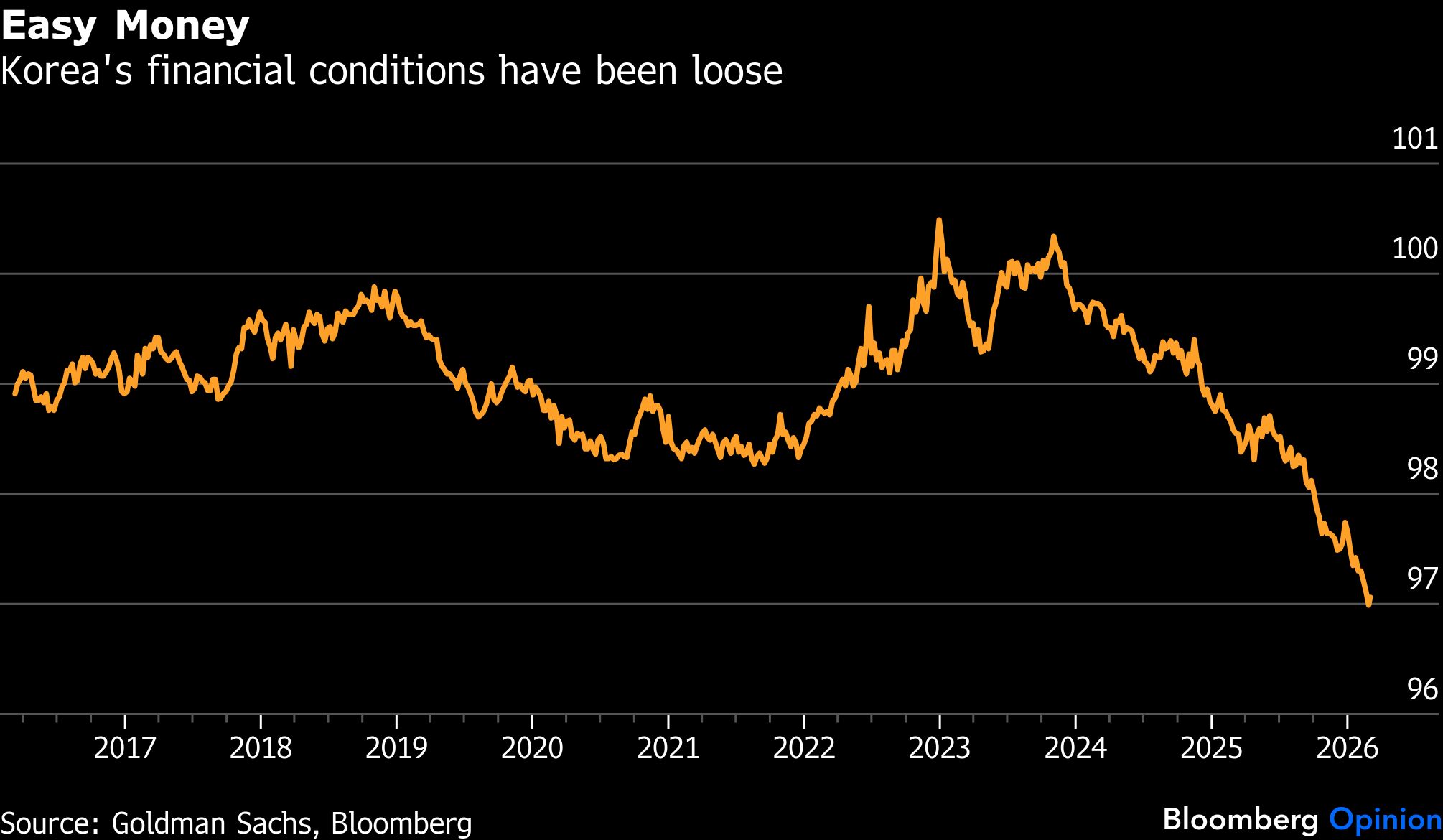
As the Iran conflict drags on, the tide is starting to recede. A sudden strengthening of the US dollar is eroding the case for investing in emerging markets. Meanwhile, there are worries that local benchmark interest rates will have to rise as an extended oil shock pushes up inflation. Higher money market rates raise the cost of margin-financed trading. Until recently, financial conditions in Korea were at multi-decade lows.
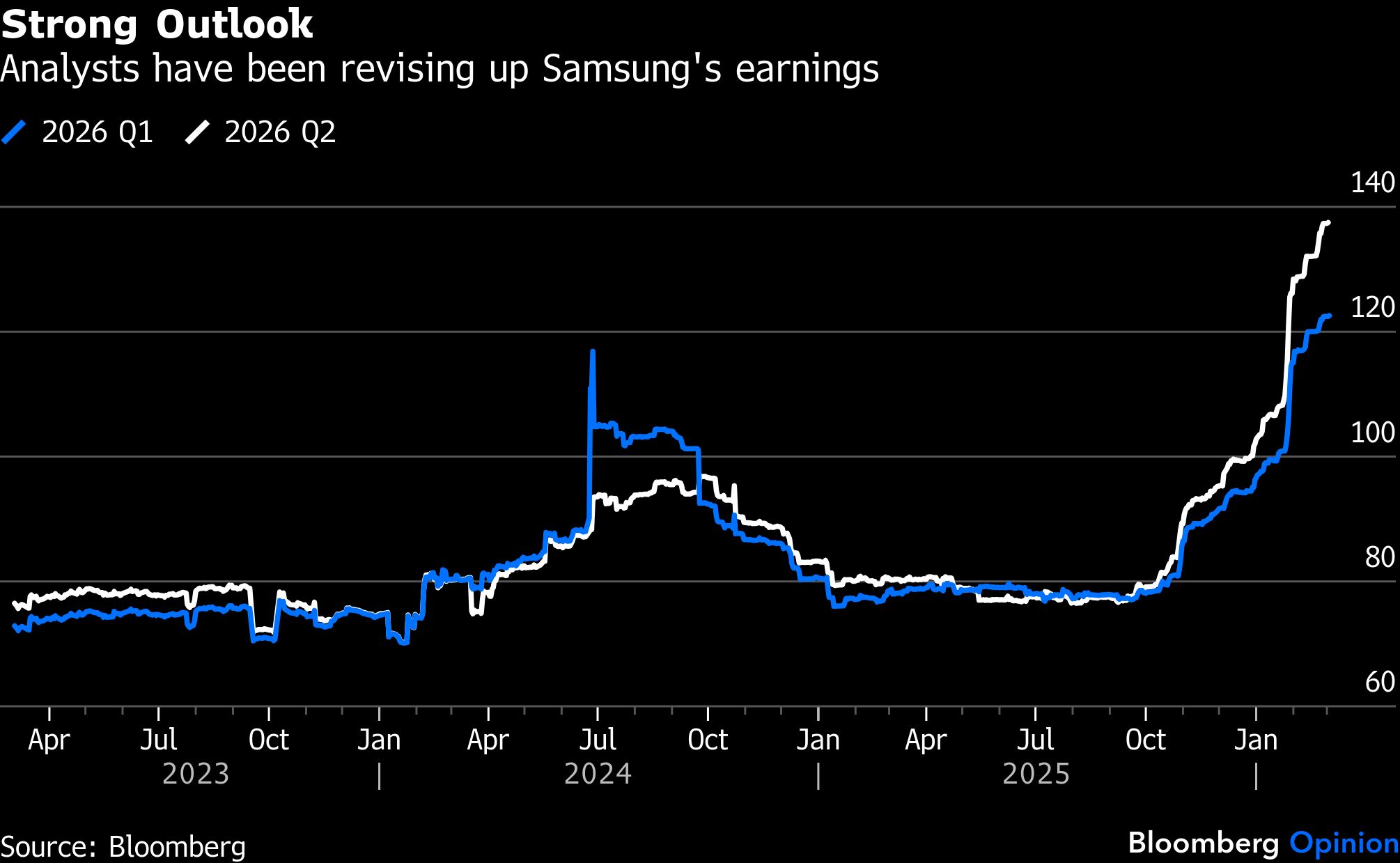
It’s perhaps best to consider this selloff as a painful but healthy cleansing. It de-leverages and chases away momentum-driven speculators. What’s left will be those who care about company earnings and reasonable valuations. After all, upward earnings revisions are a lot stronger in Asia than in the US.
International diversification has been a major theme this year as global asset managers look to reduce their heavy exposure to US assets. But the one-way traffic into North Asia has been so heavy that an exogenous shock thousands of miles away is creating sharp reversals. Unfortunately, the Sell America trade has morphed into a blanket selling of Asian assets.
A message from Advisor Perspectives and VettaFi: Discover something new! Click here to register for our upcoming webcasts.
Bloomberg News provided this article. For more articles like this please visit
bloomberg.com.