One frustrating characteristic of the AI boom seems to be that everyone must pay for it, regardless of any interest in using it. For some, it will be through rising utility bills as data centers strain the grid. For even more of us, it will be increasing costs of just about every electronic product you can think of: laptops, smartphones, televisions — perhaps even cars.
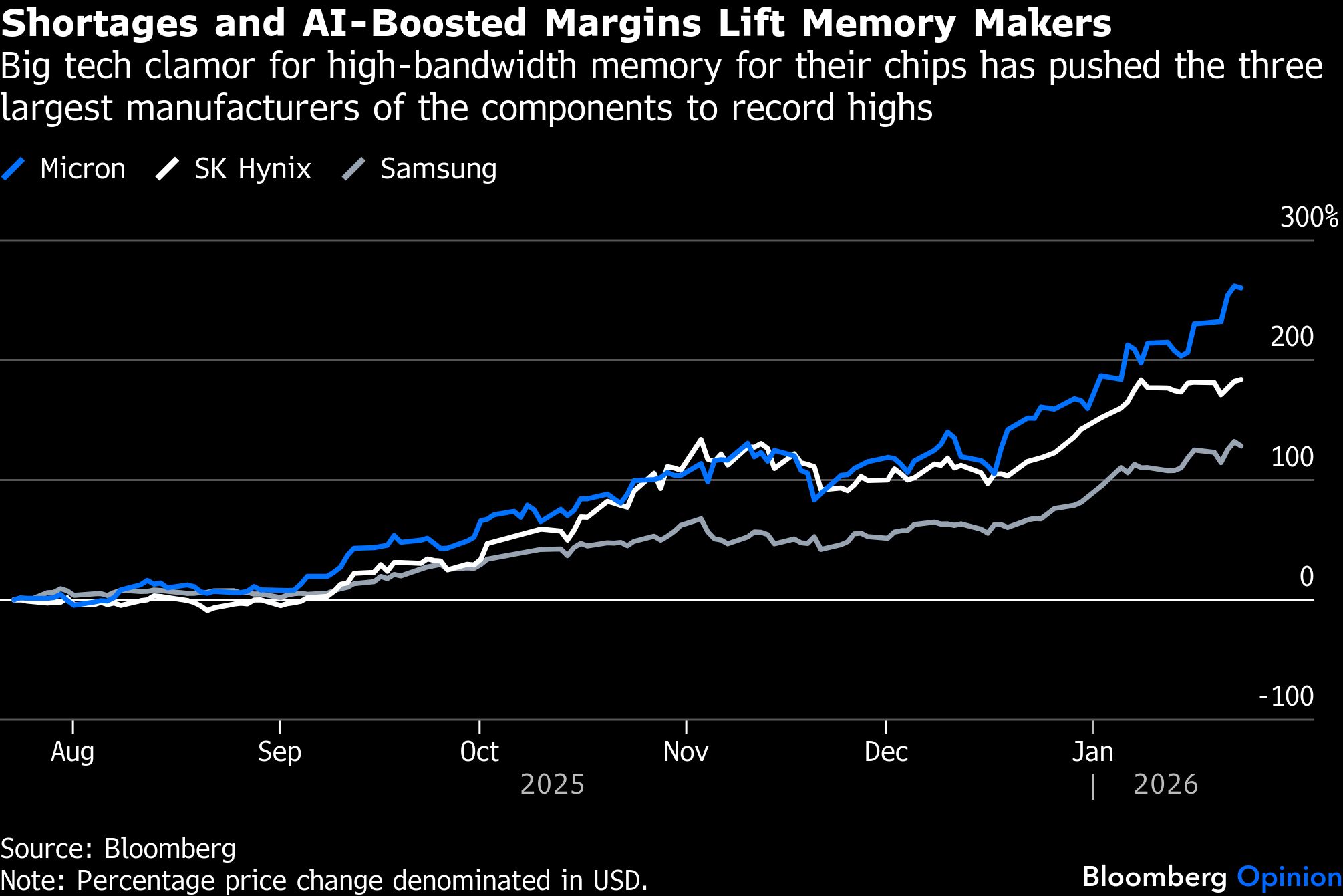
The reason is a dire global shortage of memory chips that’s projected to intensify this year and beyond, crippling the tech supply chain for everyone except the largest and richest AI hyperscalers that can buy their way to the front of the line. The clamor for these key components has paved the way for the “longest and most stable upturn in history,” Chae Minsook, an analyst at Korea Investment & Securities, wrote in a note.
The shortage is due to shifting priorities among the three largest memory makers. SK Hynix Inc., Micron Technology Inc. and Samsung Electronics Co., which are collectively responsible for more than 90% of global production of dynamic random access memory (DRAM), have diverted capacity to building the high-bandwidth memory (HBM) needed for AI chips, enjoying much higher profit margins as they go. Describing it as a “hyper-bull” market, Counterpoint Research highlighted the cost of 64GB RDIMM, a type of memory used in servers, “which jumped from $255 in Q3 2025 to $450 in Q4 2025” and is “targeted to reach $700 by March 2026.”

This month, Samsung reported a tripling of quarterly profits off the back of soaring memory prices. The Korean giant is also on the cusp of a huge deal to supply memory to Nvidia Corp. Demand is far outstripping supply, however: SK Hynix, the market leader, said it had sold out its 2026 allocation of memory already. Analysts with Capital Securities project the memory crunch will last through 2027.
The reallocation of resources means the kind of memory found in other tech products is now in extremely short supply, a fact you might come face-to-face with the next time you try to buy a piece of consumer technology. “This is a zero-sum game,” noted analysts at IDC. “Every wafer allocated to an HBM stack for an Nvidia GPU is a wafer denied” to a smartphone or laptop.
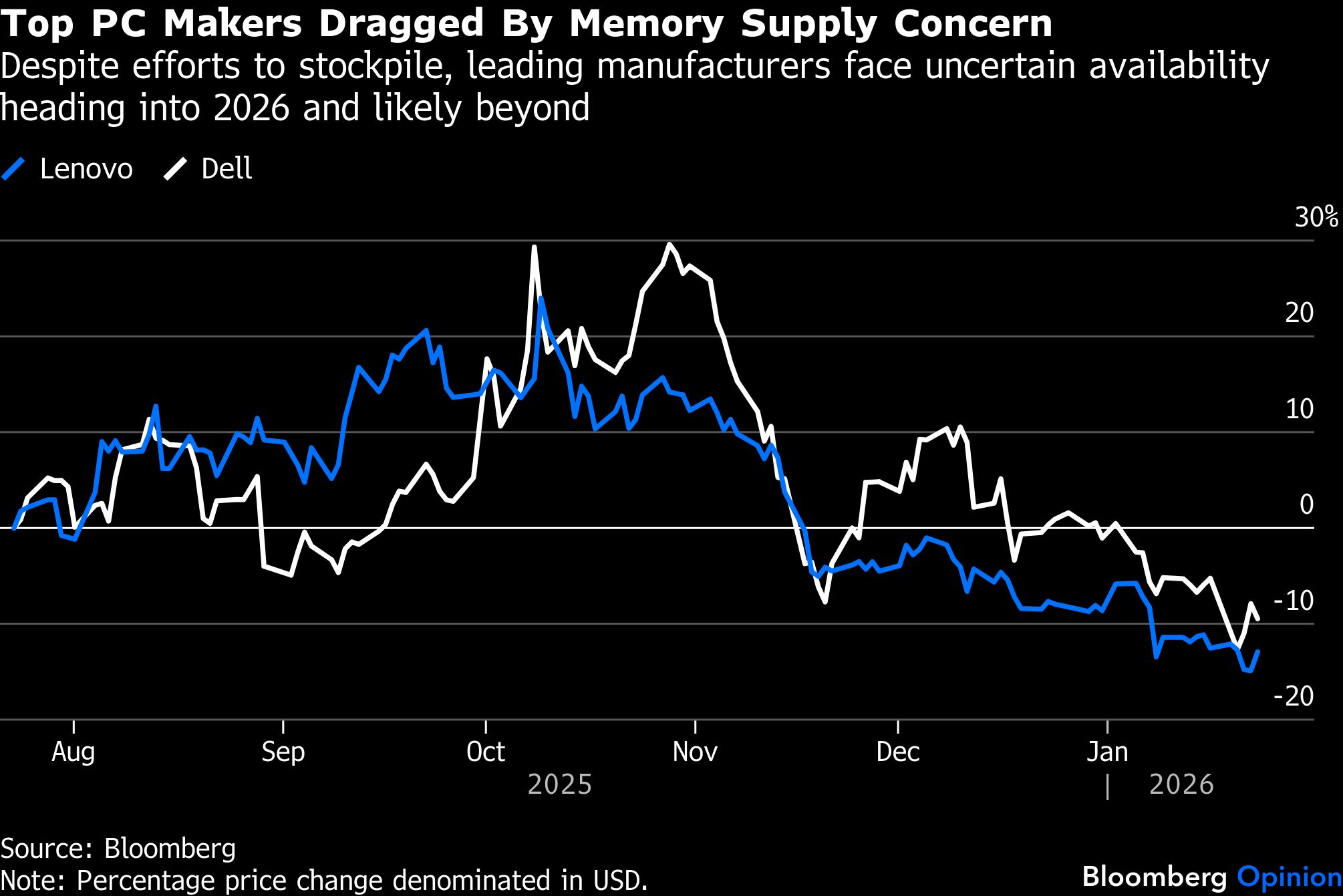
The impacts are set to weigh heavily throughout earnings season for tech companies exposed to memory price pressures. Intel Corp., which produces CPUs for the majority of PCs sold worldwide, warned on Thursday that memory shortages “could limit our revenue opportunity this year.” Smaller players in the market were “scrambling” to find memory, Chief Executive Officer Lip-Bu Tan said, affecting their ability to finish making products that use Intel chips.
Leading device makers have made efforts to mitigate the shortage, but even the most aggressive stockpilers can only do so much. Lenovo, the world’s largest PC maker, has stashed away memory at about 50% above its usual levels, its chief financial officer told Bloomberg, but added the company would need to work at balancing price and availability in 2026. Samsung has the benefit of being able to make chips for itself, but its president, Wonjin Lee, acknowledged that “we’re going to be at a point where we have to actually consider repricing our products.”
Apple Inc.’s premium price point and long-term supply agreements give it some insulation. But UBS analyst David Vogt warned that “risk does increase in the June and Sept quarters as production of the next gen of iPhones ramp, impacting cost and margin.”
Estimates from Bloomberg Intelligence suggest PC prices could rise as much as 20%. Smartphones could experience a similar increase, IDC analyst Francisco Jeronimo told me, with a disproportionate impact on lower-end models that stand to get both more expensive and less powerful. Chinese smartphone makers, the backbone of the budget Android market, are “slashing their 2026 shipment targets by tens of millions of units,” according to the South China Morning Post. Overall, IDC projected a decline in the global market for smartphones and PCs.
In addition, analysts at UBS have warned that auto production could be disrupted in the second quarter, with the price of memory chips used in cars doubling.
The obvious way out of the memory crunch is to make more of it. Efforts are well underway, but it will be a while before the additional capacity makes a difference. Micron, for instance, has used money from President Joe Biden’s Chips Act to build a new facility in Idaho, though it won’t come online until 2027. The company’s promised $200 billion investment in the US has a timeline best laid out in decades. Micron also signed a letter of intent to buy a chip fabrication site in Taiwan for $1.8 billion, expecting “meaningful” output in the second half of next year, Bloomberg reported. Counterpoint Research projected DRAM production will increase 24% in 2026 compared with output last year, well short of demand.
While we wait for all that, the market for secondhand tech is already booming. New York-based Computer Overhauls, a seller of secondhand computing products, said it was seeing unprecedented increases in value for DRAM, a component that often went overlooked when stripping old PCs for parts. “It wasn't even something we paid a whole lot of attention to because the value was relatively minimal,” said Adam Sanderson, the store’s founder. “We sold a 16 gig set for $160 today; a year or so ago it certainly wouldn’t have been anywhere near that.”
Big Data Supply Inc., a California-based recycler of old data center equipment, told me revenue for January is up 300%, driven largely by secondhand memory gaining new appeal. “With the amount of inbound inquiries, it feels like there is no end in near sight,” said Brian Musil, the company’s CEO.
No end in near sight is the most often-repeated phrase from those watching the industry closely. Consumers would be wise to get ahead on any big tech purchases now before what seems certain to be sweeping price increases across the board. For the foreseeable future, the AI boom will turn on its head our expectation that technology gets both cheaper and more powerful as time goes on. The memory crunch is just one more way in which consumers are carrying some of the burden for AI giants’ rush to build out their ambitions.
A message from Advisor Perspectives and VettaFi: Discover something new! Click here to register for our upcoming webcasts.
Bloomberg News provided this article. For more articles like this please visit
bloomberg.com.
Read more articles by Dave Lee