If you can’t get what you want, get what you need. It’s taken the best part of two years, but JPMorgan Chase & Co. has finally helped Goldman Sachs Group Inc. and Apple Inc. do just that with the tech giant’s credit card.
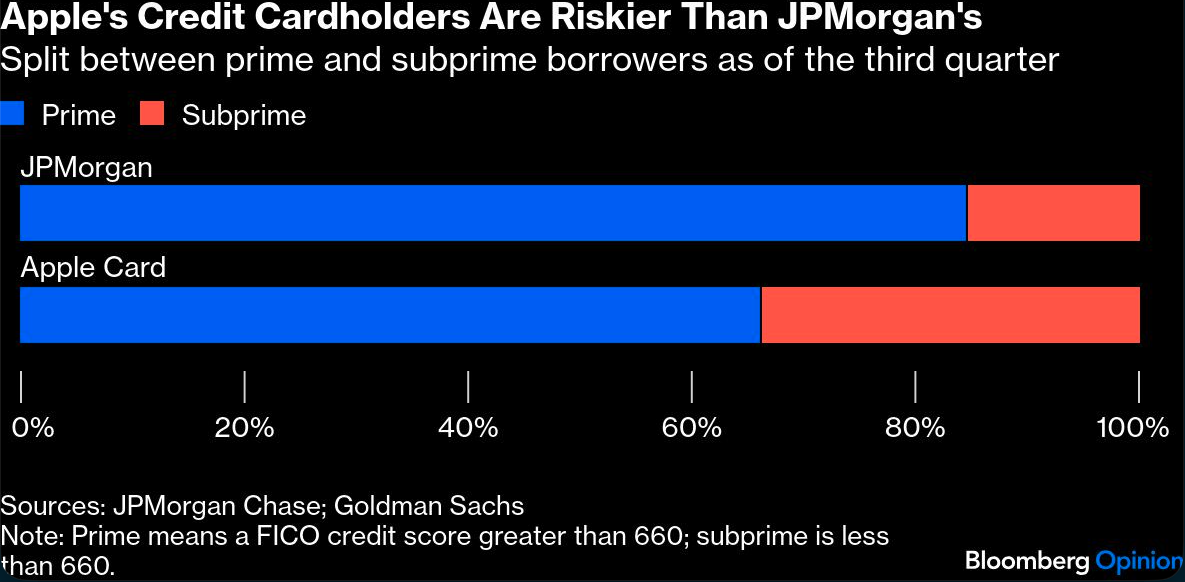
It’s a good result for all three firms — Goldman escapes its error-strewn foray into consumer finance, Apple gets a partnership with America’s best-run bank, and JPMorgan wins some useful growth in the form of a $20 billion book of card loans. The deal is far from risk free for JPMorgan, but it helps in the hunt for ways to put some of its roughly $60 billion of excess capital to work — no simple task for a lender already so dominant in the US.
For Goldman, the exit draws a line under an embarrassing chapter. It launched the credit card with Apple in 2019, the year after David Solomon took over as chief executive officer of the investment bank. He wanted to build a set of consumer businesses to add more reliable revenue to the ups and downs of trading and doing deals. It proved a disaster, upsetting senior bankers and ultimately leading to more than $7 billion in pretax losses on several ill-fated deals since 2020, according to analysts at RBC Capital Markets.
By the end of 2022, Solomon’s consumer mission was in deep trouble; by March 2023, Goldman was signaling that businesses bought as part of the project would be sold, starting with GreenSky, a home-improvements finance business. It’s been trying to find a buyer for the credit card portfolio since the summer of that year and JPMorgan has been involved in talks since roughly the middle of 2024, according to reports.
The extremely long negotiations reflect both Apple’s controlling nature and Goldman’s inexperience in consumer finance. The investment bank won the contract to run Apple’s card partly because it was one of the only firms willing to meet the tech company’s idiosyncratic demands related to the platform’s design, the timing of bills, Apple’s control of customer data and its determination not to charge late-payment fees to delinquent cardholders.
JPMorgan, already one of America’s leading card issuers with almost $240 billion of balances, is getting Apple’s portfolio for an extremely unusual $1 billion discount to the value of the loans, according to the Wall Street Journal. Partnerships with major consumer companies are valuable to banks and other card lenders because they bring loyal customers who spend regularly and can be sold other financial products. That’s why these books of loans normally change hands for at least face value, and often at a premium to the balances outstanding.