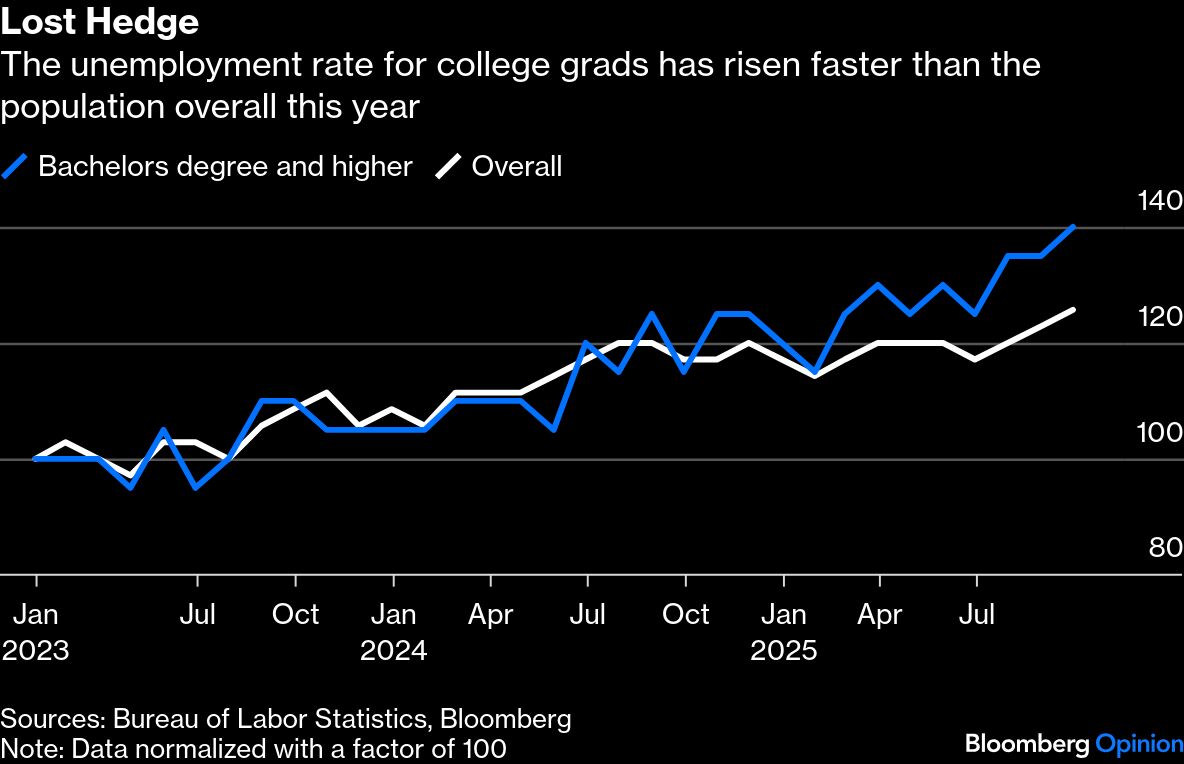
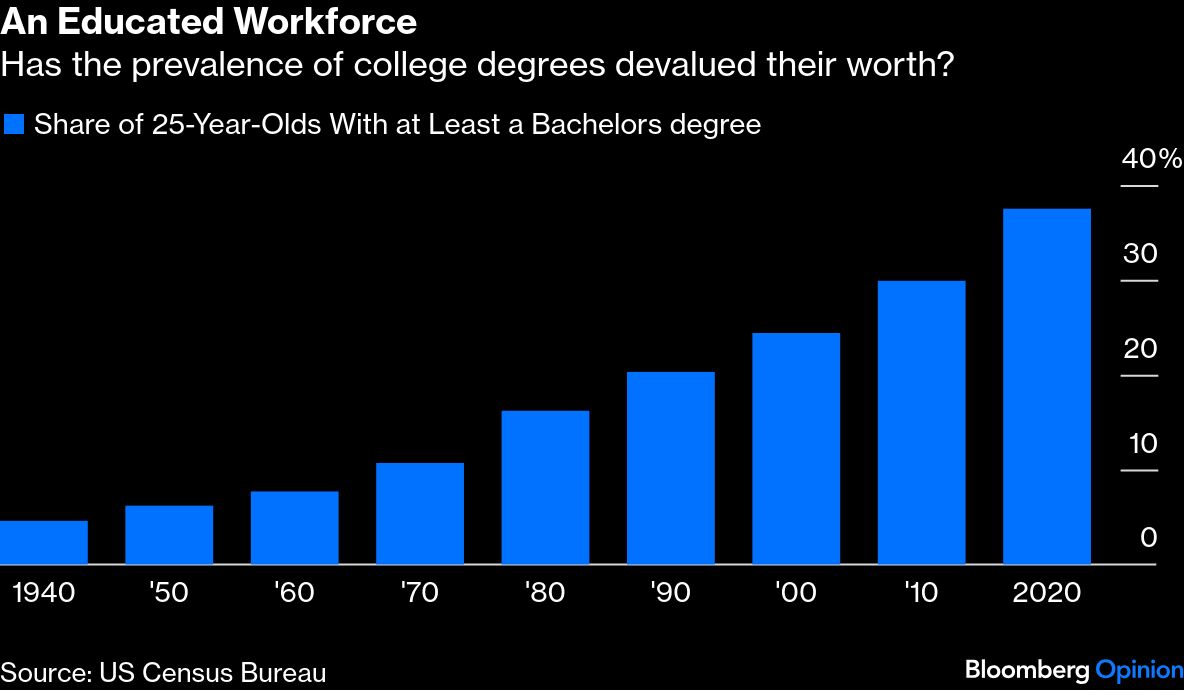
The decision to attend college was a no-brainer during the second half of the 20th century. It almost assured higher earnings and job security. Tuition wasn’t even very expensive. None of this is true now. The economic returns associated with a college degree are falling. Adding insult to injury, unemployment rates for recent graduates are the aren’t much lower than those with only a high school degree, especially for young men.
But this doesn’t mean college isn’t worth the expense for many people; it’s just that the decision has stopped being a no-brainer. Think of higher education like you would a risky asset in that the odds are it will pay off but there are no guarantees. That may sound trite but the financial stakes have never been higher, with the average cost to attend college topping $38,000 per student per year and student debt hovering around $1.7 trillion.
A study published this year by the Federal Reserve Bank of Cleveland confirms what many recent graduates are discovering, which is that it’s hard to find a job. Based on their research, economists at the regional Fed bank found that the gap in the rate at which high school and college grads exit unemployment began to narrow around 2000 and by 2019 high school graduates left unemployment sooner than college grads. Here’s how they summed up their findings:
Historically, college grads had much lower rates of unemployment and if they lost their job, they were not unemployed for long. Now unemployment rates and the job-finding rate are converging between college grads and everyone else. Even more worrying, some are leaving the labor force entirely, perhaps because they are discouraged.
This could be a clear sign of a weak labor market, or at least further evidence that employers over-hired at the end of the pandemic and are still rightsizing their workforce. Worse, this could be a longer-term structural issue that won’t improve even when the economy strengthens, perhaps related to the artificial intelligence revolution. The Cleveland Fed study suggests the current state of the economy isn’t to blame (though it may be exacerbating the situation). Labor market prospects for new grads have been deteriorating for decades. The percent of the newly unemployed who find a job has been converging between the cohorts since 2000 and recently flipped. It averaged 41% for high school grads and 47% for college grads between 1976 and 2000, but in 2024 to 2025 the rate was 41.5% for high school grads and 37.1% for college grads.
The reasons why are many. A big one relates to the laws of supply and demand in that that there are simply many more college graduates than in the 1990s. If you increase the supply of something its price and scarcity decrease. The links between a college degree, increased earnings and a comfortable lifestyle were powerful incentives, which is helps explain why the share of the college educated population among people 25 years and older increased from 21% in 1991 to 38% in 2024.
Then there’s the possibility that the higher education system is producing lower quality graduates. Employers used to hire college grads in part because a degree was a valuable signal that the employee would have certain intellectual skills, as well as being hard working and conscientious. But such signals weaken at a time when many institutions of higher learning are suffering financial difficulties and pushing too many unqualified students through the system in exchange for much needed tuition funds. Not even Harvard is immune, with about 60% of the grades handed out in classes for the college’s undergraduate program being A’s, up from 40% a decade ago and less than 25% two decades ago, according to a report from its Office of Undergraduate Education.
Let’s also consider that there may just be less demand for the sorts of jobs college grads are doing. The college premium used to be large because technology made thinking skills more valuable. Now that may be changing because today’s emerging technology centered around AI makes college skills less necessary or valuable, which can be seen in the trend of big companies are hiring fewer managers.
Does this mean college is a waste of time and money? It is important to remember the average college graduate can still expect to earn $1 million more over their lifetime, even if the premium has stagnated. We tend to judge the success of a degree based on what happens to a graduate in the first few years after entering the labor market. But a degree is a lifetime asset.
Which is why high school graduates should approach the decision to attend college like an investor would evaluate any financial asset: What’s the risk? What’s the reward? What’s a fair price to pay? Education isn’t a waste of time and money, but doing your research is key when picking an institution that offers good value for the money in today’s rapidly evolving economy.
A message from Advisor Perspectives and VettaFi: Discover something new! Click here to register for our upcoming webcasts.
Bloomberg News provided this article. For more articles like this please visit
bloomberg.com.