American taxpayers spend billions of dollars annually supporting pharmaceutical development. Yet the US continues to pay more for medicine than any other country in the world. This discrepancy so disturbed the president that top health officials say he routinely called them on nights and weekends, urging a solution.
After months of “haranguing and harassing,” their efforts appear to be paying off. Last week, the administration announced a deal with Pfizer Inc. to (among other things) better align its US prices with those in other rich nations. So-called most-favored-nation pricing would apply to existing drugs the company sells to Medicaid, the health program for the poor, as well as to new products. In return, Pfizer would be exempt from pending pharma tariffs — which could reach 100% — for three years.
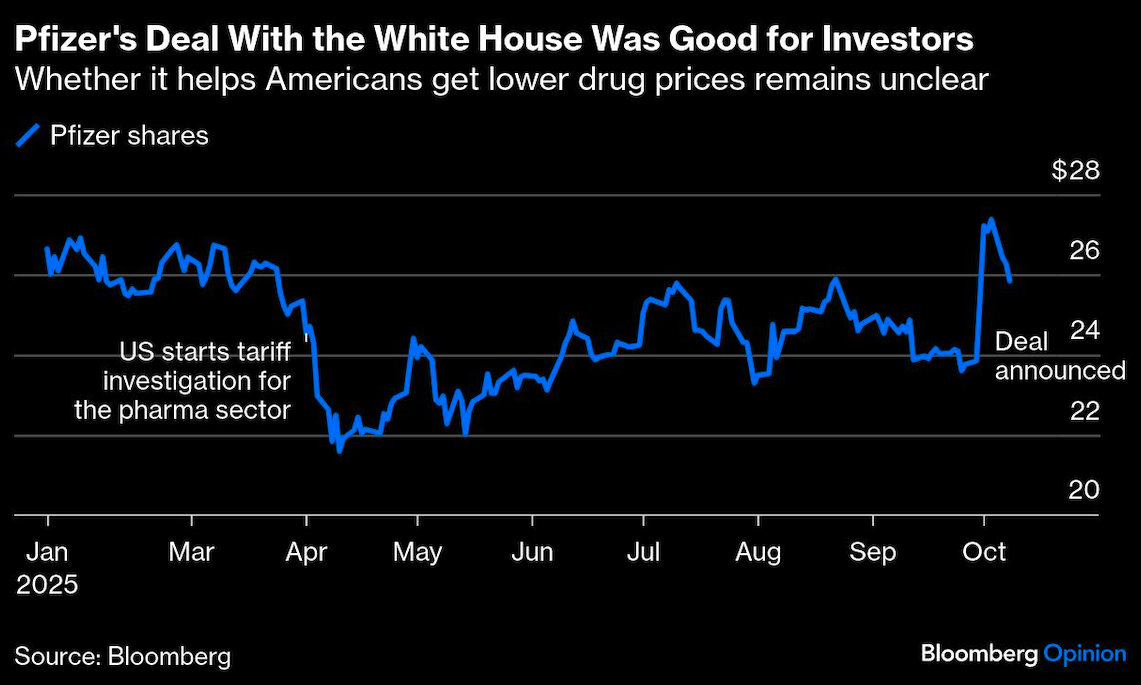
Everyone declared victory. The White House secured substantial discounts for certain medications, and Pfizer’s shares gained more than 5%. The broader industry rallied on hopes that the tariffs might be painlessly evaded. But while any progress toward lower drug prices should be celebrated, this deal deserves scrutiny for two reasons.
First, the arrangement applies only to Pfizer. Although analysts say the negotiations offer a template for others to follow — and a rush of companies are coming to the table — the details remain confidential.
Cutting deals with individual companies may offer some negotiating advantage to the administration. Yet absent greater transparency, such ad hoc dealmaking sets a terrible precedent — not only by inviting corruption, but also by increasing uncertainty for businesses, potentially chilling investment and delaying development of new medicines. It also places smaller companies, few of which have regular audiences with the White House, at a competitive disadvantage and leaves them subject to tariffs that are sure to raise prices for patients.
Second, it’s unclear how much patients ultimately will benefit. Pfizer products account for a small fraction of Medicaid’s prescription-drug spending. Even if every medication sold to the program qualified for discounts (which is unlikely), the impact would be relatively muted.
Relatedly, Medicaid already receives generous prescription-drug discounts from multiple programs. MFN is unlikely to offer a much better deal. Far more effective would be to apply the framework to Medicare, the program for the elderly, which spends almost three times more on medicines than Medicaid, and eventually to the large employer-sponsored market. Moving toward a single, transparent price would go a long way toward minimizing distortions from the nation’s opaque and fragmented health-care system, which often impedes access to critical drugs.
To be clear, MFN has its drawbacks. The White House rightly complains that Americans have been subsidizing pharmaceutical innovation for the world. Yet higher prices also have supported significant advancements in the medical field that aren’t readily available abroad, including cancer treatments needed by a growing share of the global population. The administration is pressing drug companies to charge European nations more to offset US discounts and appears to be making some progress. Striking the right balance will be key.
For decades, presidents from both parties have made lowering drug prices a priority. Progress has been halting. If this administration can increase accountability and predictability while expanding the reach of its proposal, there’s reason to hope for a breakthrough.
A message from Advisor Perspectives and VettaFi: Gain exposure to the evolving digital asset landscape. Learn about CoinShares ETFs.
Bloomberg News provided this article. For more articles like this please visit bloomberg.com.













