A standoff between homebuyers and sellers played out in much of the country over the past two years, and particularly in internal migration destinations such as Florida and Texas. The number of homes on the market rose as poor affordability constrained would-be buyers, but sellers rejected offers significantly below the 2022 peaks. That’s changing. Builders and homeowners are demonstrating that they’re more motivated to sell, giving potential buyers greater bargaining power this spring.
This was the message from two large developers Lennar Corp. and KB Home on their recent earnings calls. The incentives Lennar offered house hunters in its first quarter comprised 13% of revenue, the highest since 2009. Executives said they expect incentives to remain elevated in the current quarter, which is why they guided profit margins to near their lowest level in a decade. The company’s average closing price may fall mid-single-digits in 2025, representing the third consecutive year of declines, according to Bloomberg Intelligence. KB Home said that sluggish demand prompted the company to shift from “pocket incentives” — offered to prospective buyers touring properties but not publicly advertised — to just putting the deals on its website. That and lowering prices in communities with sluggish activity led to a sales pickup.
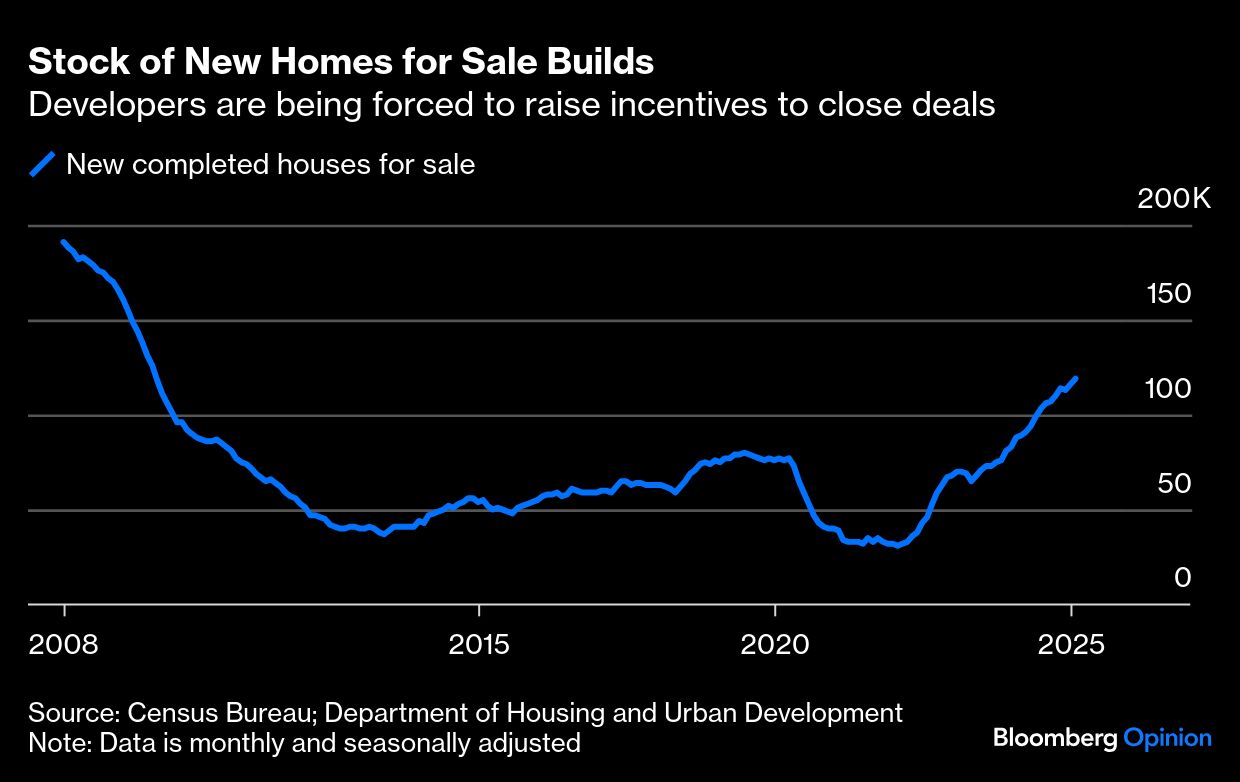
Builders have to work harder because there are currently more completed new homes available than at any point since 2009. The resale market is also seeing a shift. Florida and Texas, where homebuilders are active and which historically rely on interstate migration for population growth, now have more existing homes for sale than there were at this point in 2019 before Covid’s disruptions began. That’s also true in Tennessee and Colorado. In an environment where affordability is poor and the rental market loose, it’s sellers who must accommodate buyers if they want to transact.













