Before 2023 began, few saw the rise of interest in investing in Japan, long considered the land that optimistic stock bets go to die.
But from spring of last year, inspired by the confidence of Warren Buffett and a realization that not only were things changing but had already changed, investors suddenly couldn’t get enough. The Nikkei 225 index hit highs not seen since 1990, while headlines spoke of a “stock market miracle” and asked “how Japan got its swagger back.”
In the months since, the optimism has been sustained: UBS Group AG appointed an equity strategist for Japan for the first time in seven years; Blackrock Inc. went overweight on Japanese stocks; and international funds flooded Tokyo in October for a government-led summit to encourage investment.
But with the Nikkei 225’s 30-plus-year high, will 2024 be one that finally hits a new all-time record? Or is this just another of the many false dawns investors have found in the Land of the Rising Sun?
Reasons to be cheerful...
Political Independence: The single most convincing reason to hope it’s different this time is the 2023 boom didn’t depend on the promises of a talismanic political figure. Previous periods of intense investor interest, during the administrations of Junichiro Koizumi and the second term of Shinzo Abe, were predicated on hopes the charismatic leaders made for the future. When they didn’t arrive (or at least took longer than advertised), investors got cold feet and took their money elsewhere.
But while Prime Minister Fumio Kishida has been playing cheerleader for the current boom, it isn’t linked to his confusing economic doctrine of New Capitalism. Just as well, as it seems unlikely he’ll survive the year in the top job. But assuming his successor doesn’t ruffle too many feathers, there should be little reason for investors to get spooked by leadership shift.
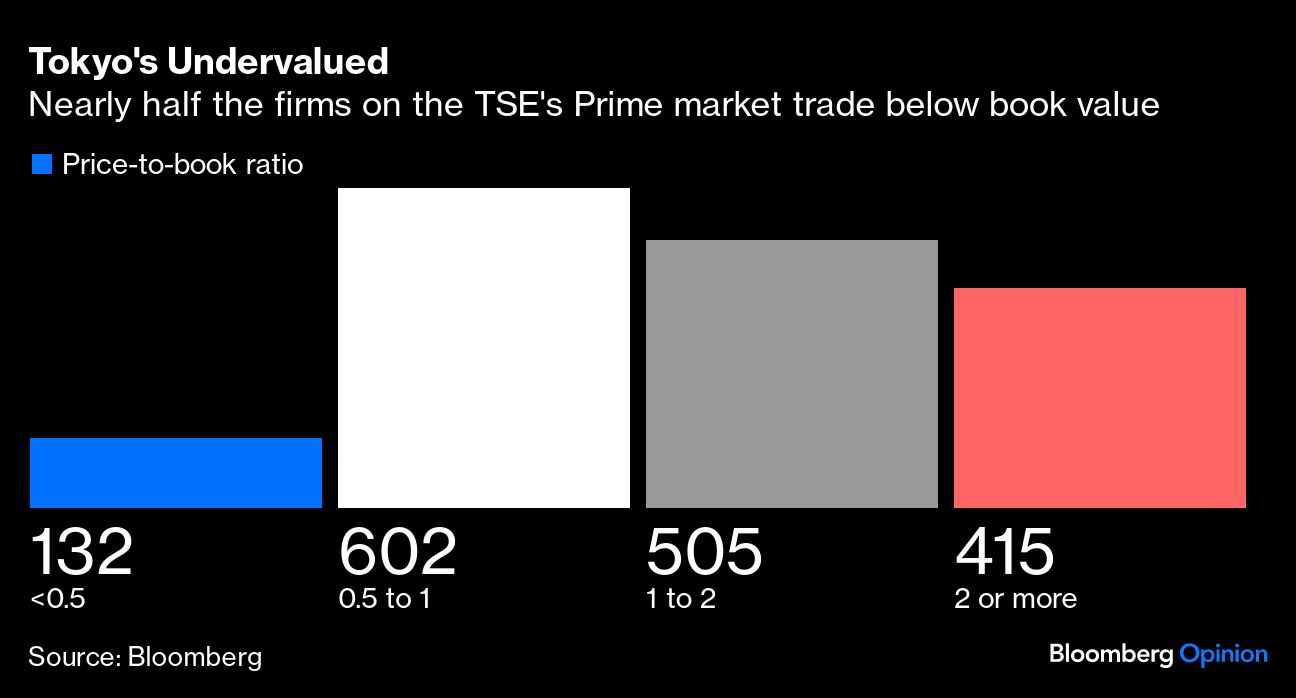
Governance Gains: A key catalyst for the 2023 boom was the sudden awareness that Japanese boards had changed. Corporate governance reforms begun under Shinzo Abe had begun to pay dividends, both figuratively and literally, while at the start of the year the Tokyo Stock Exchange increased its campaign to nudge companies trading below book to improve valuations.
While I, like many, was skeptical of the slow-burn approach adopted by Japan Exchange Group Inc. Chief Executive Officer Hiromi Yamaji to improve corporate governance, his pressure campaign is paying off. The bourse will this month begin publishing a list of firms attempting to strengthen their corporate value, hoping to shame those who aren’t — some 70% of Prime-listed firms as of July. Such pestering is also contributing to more management buyouts, as firms who don’t want to deal with the hassles opt to get off the ride.

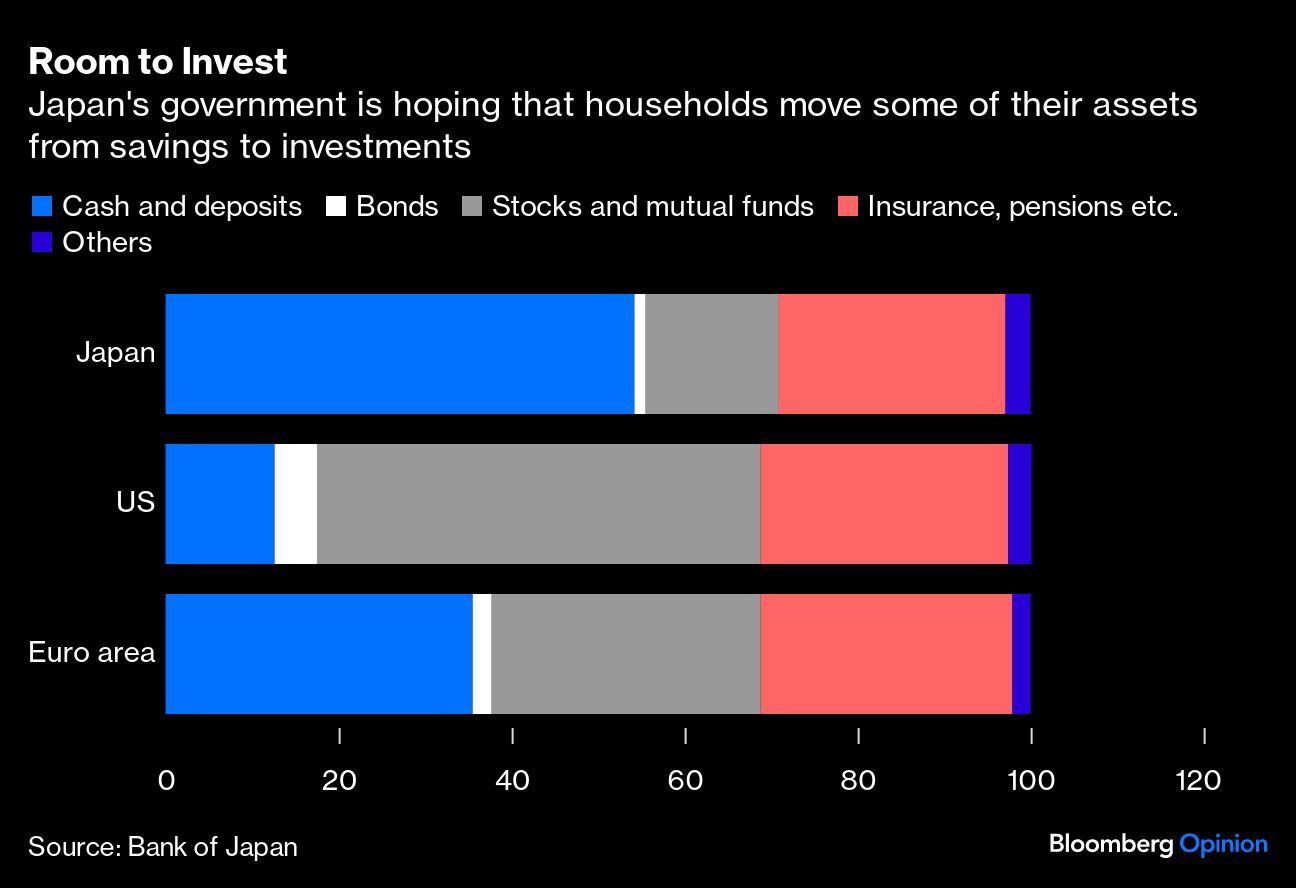
Household Assets: Pledging to shift household assets “from savings to investment” is a slogan used by politicians for at least two decades. To date, results have been mixed, but 2024 marks a bold new attempt to get money out from under mattresses with the launch of an expanded tax-free investment account, allowing individuals to invest up to ¥3.6 million ($25,000) annually. Combined with the first sustained inflation in the country in three decades, many hope this will encourage more risk-taking.
Cheap Money: One underappreciated reason for the sudden investment surge in 2023 was a belated understanding that the Bank of Japan wasn’t going on a hiking spree as soon as Governor Kazuo Ueda took office. True to form, he’s taken a slow, methodical approach, and though there’s little doubt he wants to exit negative rates, don’t let that fool you: Money will remain cheap in Japan for the considerable future. A sustained series of hikes isn’t going to happen. And Buffett himself is among those taking advantage, raising ¥122 billion late last year.
… but beware these risks
Yen Reversal: The stock boom isn’t dependent on the weak yen, but it’s certainly a contributor. As the yield differential between the US and Japan — frequently blamed for the yen’s tumble in the past two years — narrows in 2024, the yen is set to strengthen, with forecasts compiled by Bloomberg News suggesting somewhere closer to ¥135 against the dollar by the end of the year, a headwind for export-dependent stocks.
Diminishing Hopes: Investor interest in Japan might not require a charismatic leader, but it definitely requires a narrative. That story could be flipped quickly by data, however: GDP figures for the third quarter were abysmal, and growth this year is expected to slow to half of 2023’s as the post-Covid-19 bump slows. Fears of a US recession in 2023 didn’t materialize, but the uncertainty remains, with 50% of economists surveyed by Bloomberg expecting one in the next 12 months.
Things are at least looking up for positive headline news from the shunto spring wage push. But that didn’t help real wages, or the elusive virtuous cycle of inflation, much in 2023. And Japan’s demographic challenges persist, even if the realization is dawning that it’s far from the only country suffering.
Déjà Vu: Perhaps the biggest risk is that investors been burned too many times. Japan remains misunderstood, and if past performance is anything to go by, it won’t take much for foreign funds to get cold feet: The whiplash from the pile-on in the early days of Abenomics to the rapid withdrawal a few years later still sticks in the mind. “Tourist investors,” new to the market there, get spooked easily. And in Japan there’s always the threat of a natural disaster to send financiers to the emergency exit.
And yet...
Few are forecasting that Japanese stocks will finally top their 1989 highs this year; short-term risks seem skewed to the downside. But if Tokyo can simply become a normal market to invest in again — and an alternative to China for those seeking exposure to Asia — that would nonetheless be a significant step forward.
A message from Advisor Perspectives and VettaFi: Advisors: You're Invited to Exchange! Nothing would be a better start to the new year than if you joined us at Exchange, an in-person conference for members of the financial services community in Miami, Florida on February 11-14th. For a limited time, we're offering you a free Exchange ticket!* Register today with code WINTER24 to claim your pass.
Bloomberg News provided this article. For more articles like this please visit
bloomberg.com.
Read more articles by Gearoid Reidy