
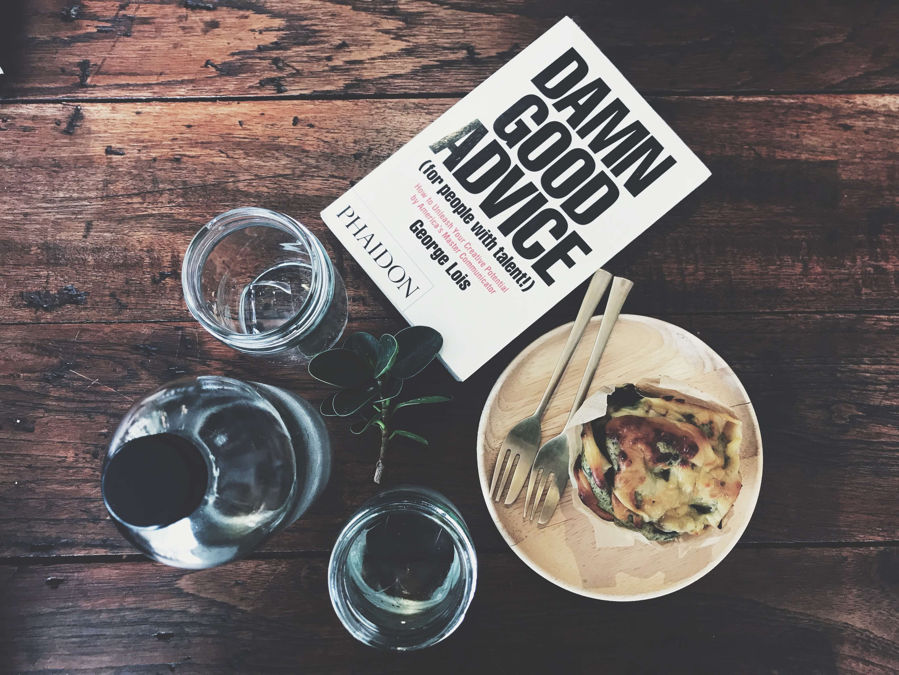
Photo by Frame Harirak on Unsplash
Advisor Perspectives welcomes guest contributions. The views presented here do not necessarily represent those of Advisor Perspectives
Click here to watch a video and learn more about Evidence Based Advisor Marketing.
I get it. You’re a financial advisor. You understandably believe prospects come to you to get the benefit of your wisdom. After all, you’re in the business of giving advice.
Except you’re not.
In fact, dispensing advice can be your biggest barrier to success.
Here’s the harsh reality: Often, prospects and clients don’t want your advice. Here’s why:
The peril of giving advice
This blog by Gustavo Razzetti should be required reading by every advisor (and every parent!). Razzetti nicely summarizes the reasons why you should stop giving advice.
He accurately notes that giving advice is highly pleasurable for those giving it, but not for those on the receiving end. Giving advice makes you feel good. But it often does nothing for the recipient. It can even be harmful.
Giving unwanted “advice’
A friend had a dental procedure. He’s a sophisticated executive with a graduate degree.
A day after the procedure, he called to tell me he was experiencing unexplained bruising under his eye and thought it might be related to his visit to his dentist. Without hesitation, I said: Maybe you should check with your dentist.
He replied, dryly: Thanks for that suggestion, Dan. I hadn’t thought of that.
He was correct, of course. My “advice” was both useless and obvious. It made me feel like I was making a positive contribution, but did nothing for him.
That experience caused me to reflect. I wonder how often I offer advice, where I said nothing the other person hasn’t already considered.
Even when people appear to be asking for your advice, they most likely are seeking validation of a decision they’ve already made.
Giving advice is counter-productive
Here’s a great quote. Tuck it away and recall it the next time you are ready to propose a quick solution for someone else’s problem:
Unsolicited advice doesn’t work. Offering something that people did not request is pushy. Your advice will automatically go in the junk box.
“No one cares about your advice.”
I love that quote! We think our advice is special, unique and highly valued. Often, we actually make matters worse by giving unsolicited advice or assuming our advice is being sought.
Empathy trumps advice
Razzetti correctly notes that, “The best advice is being empathetic to the person who needs help. Practice walking in the other person’s shoes, rather than trying [to get] them to walk in yours.”
For advisors, this means taking off your “advice hat” and putting on your “empathetic hat.” Your goal is to elicit information. This is a much different role than being the all-knowing dispenser of wisdom.
As Razzetti observes, “Asking questions without interrupting can help you (and the other party) better understand what the real problem is.”
In my example where my friend was experiencing pain after visiting his dentist, a better response would have been, “Yikes, is there anything I can do to help?” or, “I can’t imagine how uncomfortable it is to have to deal with that.”
When you must dispense advice
Marketing Services For Evidence-Based Advisors
We offer consulting services on how to convert more prospects into clients through Solin Consulting, a division of Solin Strategic, LLC. Our evidence-based persuasion strategies have significantly increased conversion rates for our coaching clients
We recently launched Evidence Based Advisor Marketing, LLC (EBAM). EBAM offers a full range of digital marketing services exclusively to evidence-based advisors. These services include: web and content creation, video creation, production and post-production, social media consulting and e-mail marketing consulting.
For more information, please contact:
Dan Solin
[email protected]
(239) 949-1606
Schedule a call with Dan here
Of course, there will be times when it’s appropriate to dispense advice. Instead of embracing this opening, Razzetti recommends listening first, asking more questions, helping the other person frame the issue and providing options instead of black and white solutions.
Compare this thoughtful, restrained, empathetic approach with your response when you are asked a question.
Don’t automatically think prospects and clients want you advice. There will be many times when you can build a relationship of trust and confidence by not giving it.
Dan Solin is a New York Times best-selling author of the Smartest series of books. His latest book is The Smartest Sales Book You'll Ever Read. His sales coaching practice includes helping advisors convert prospects into clients and generating leads through videos and other elements of marketing. Dan is not affiliated with any advisory firm.
Get Dan's investing insights by signing up for his free, weekly newsletter here.
Subscribe to Dan’s YouTube investing channel here.
Read more articles by Dan Solin
 Advisor Perspectives welcomes guest contributions. The views presented here do not necessarily represent those of Advisor Perspectives











