 Even the most avid baseball fan may not realize that A-Rod, who was one of the highest paid players in MLB history, says that committing to a financial plan from the onset enabled him to successfully make it from rags to riches.
Alex Rodriguez, more commonly known as “A-Rod,”, is a former World Series champion and Major League Baseball (MLB) all-star.
From the earliest stages of A-Rod’s career, when he couldn’t even afford to split a New York City cab ride with Derek Jeter, he had a wealth management strategy.
Rodriguez was determined to avoid falling victim to the major financial losses that commonly plague professional athletes. While he worked to establish himself as one of the greatest athletes of all time, A-Rod adopted a disciplined investment approach.
He spoke at the Wall Street Journal’s Future of Everything Festival on May 8. The conference focused on investment strategies and building a business off the field.
Rodriguez was a shortstop and third baseman who played 22 seasons in the MLB for the Seattle Mariners, Texas Rangers and New York Yankees. He was one of the sport's most highly touted prospects, and his last MLB game was in August 2016. He was a 14-time American League all-star and three-time MVP. He is also the career record holder for grand slams with 25. Rodriguez’s last MLB game was in August 2016, and he has since built businesses off the field.
Rodriguez is the CEO and founder of A-Rod Corp, a diversified investment company with a fully-integrated real estate development firm and holdings in an array of ventures. In recent years he has launched a career in the media, appearing regularly on several television networks.
I will explain how A-Rod designed his first asset allocation strategy, but first let’s look at why he saw the need to have a financial plan.
The risk of going from rags to riches to rags
Like many great baseball players, throughout his childhood Rodriguez was surrounded by families overwhelmed with financial struggles. He grew up with a single mother in Miami, so being disciplined about household expenses was necessary. “I watched my mother first hand be a secretary in the morning and serve tables at night,” he said.
Rodriguez said his interest in numbers started early on, and that from a young age he was made aware of the major perils that come with pursuing a career as a professional baseball player.
Having learned from his mother the importance of earning steady household income, he knew it was risky to rely on making it professionally.
“Most people don't live out dreams of being a Major League Baseball players”, he said, “there are only 750 [players in MLB uniforms].”
Rodriguez was encouraged to seek other opportunities while pursuing an athletic career. “When I was 10 years old, I wanted to be a CEO and I wanted to be a Major League Baseball player,” he said.
Statistics helped him understand another problem he would have to overcome – even if he did reach the MLB, his financial security was not guaranteed.
“I remember looking at the numbers,” he said, “and what I saw was an interesting metric.”
If you're an athlete, you make 90% of your earnings from age 20 to 30, according to Rodriguez.
“The average career for a Major League Baseball player is 5.5 years,” he said, “and less than 5% of the 750 players in the major league roster have a college degree.”
“I'm not a stock broker, but with that information alone, I would short that stock,” Rodriguez said jokingly.
He was aware of this reality from the onset of his career. “I do not want to be one of these athletes that made it from rags to riches, then back to rags.”
A-Rod’s first financial plan
While he was struggling to afford rides to practice and earning a million dollars was still just a dream, Rodriguez came up with his first personalized financial plan.
“I essentially started buying into real estate really early on,” he said, “in my early twenties.”
He started with the assumption that he would probably begin accumulating assets at the age of 22 or 23. “And I just said that if I buy an asset every year and I play for five years,” he explained. “Then by the time I'm 36 or 37 I will have at least five assets, and that will be my insurance not to go bankrupt.”
“I grew that [initial investment] from a duplex,” he said, “to about 15,000 apartment units in 14 states.”
Rodriguez now owns an investment firm he is proud to manage. “We built an incredible team, world class, about 500 people across 14 states,” he said. “We continue to grow our own private equity firm.”
Marianne Brunet is a financial markets analyst at Advisor Perspectives.
Read more articles by Marianne Brunet
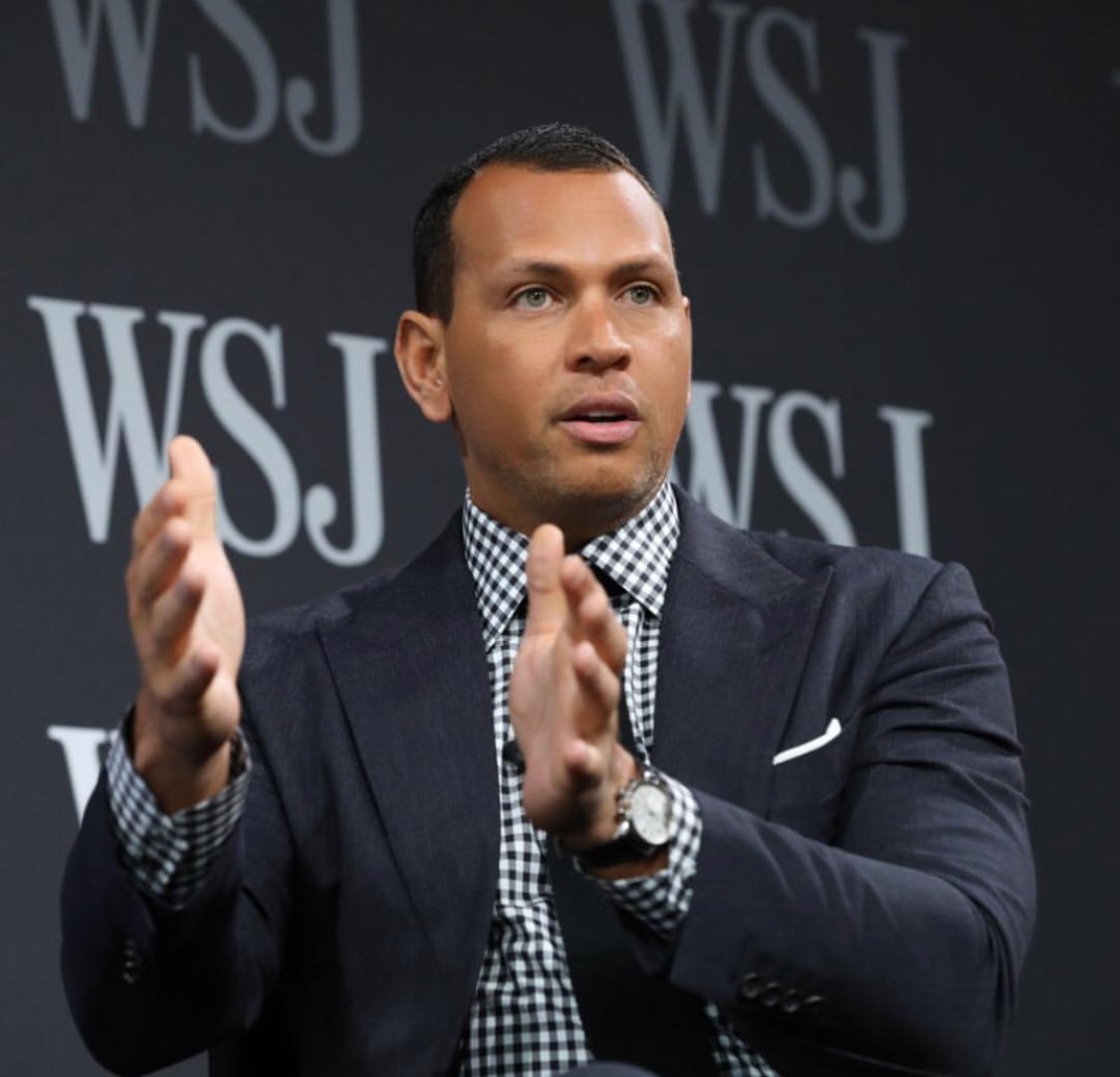 Even the most avid baseball fan may not realize that A-Rod, who was one of the highest paid players in MLB history, says that committing to a financial plan from the onset enabled him to successfully make it from rags to riches.











