Advisor Perspectives welcomes guest contributions. The views presented here do not necessarily represent those of Advisor Perspectives.
Since early May, the yield for the benchmark 10-year Treasury note has increased by nearly 100 basis points, highlighting the risk that bond fund investors face in their “safe” investments. For bond funds, rising rates mean that total return has to fight losses on the underlying portfolio. As a fund’s net asset value (NAV) declines, coupon interest may not be enough to overcome the price loss. Making the same fixed-income allocation to high-quality individual bonds instead and holding them to maturity is a superior strategy when rates rise. This strategy protects principal and avoids losses in a way that bond funds cannot.

A glimpse at interest rate risk
Interest rate risk in bond funds is like a freight train. You can see it coming long before it hits. The relationship between interest rates and bond fund total return is mathematically simple but not very intuitive. As rates rise, the prices of the underlying bonds in a bond fund fall. If prices fall by more than the coupon payments of the bonds in the portfolio, total return becomes negative.
Individual bonds, on the other hand, do not experience the same losses when held to maturity. Instead, high-quality individual bonds will deliver the scheduled cash flows from the coupons and return principal.
It is important to understand the fundamental distinction between an individual bond and a bond fund. Individual bonds represent legal obligations to pay coupon interest and return principal at maturity. That means coupon and principal payments are legally mandated when a bond is held to maturity. A bond fund has no such legal obligation. It is a pooled portfolio of bonds without the predictable characteristics offered by individual bonds. It is simply a mutual fund that happens to own bonds.
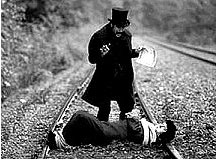
For the past 32 years, falling interest rates have masked that bond funds have an inherent weakness when rates rise. The last two months provided a sneak preview at the challenges faced by bond fund investors in periods of rising rates. Like a damsel tied to the tracks by a mustachioed silent film villain, bond fund investors sat helplessly as a small rise in interest rates crashed into their portfolios. Table 1 shows the losses experienced in May alone by the three largest bond funds – PIMCO Total Return, Vanguard Total Bond and Templeton Global Bond – which hold approximately $475 billion in assets. The average loss was slightly more than 2%, even though interest rates on the 10-year Treasury bond only increased from 1.66% to 2.16%. During June, the 10-year rose another 40 basis points, causing further damage. Portfolio turnover, lower credit quality and duration changes resulting from portfolio managers attempting to squeeze incremental yield out of the portfolio put additional price pressure on the portfolios as rates rose.
Table 1 – May losses in the three largest bond funds1
|
Fund
|
May Return
|
30 Day SEC Yield
|
Effective Duration
|
Average Maturity
|
Average Rating
|
Turnover
|
|
PIMCO Total Return
|
-2.15%
|
2.56%
|
4.77
|
6.09
|
Not Rated
|
380.0%
|
|
Vanguard Total Bond
|
-1.70%
|
1.60%
|
5.31
|
7.30
|
AA
|
80.0%
|
|
Templeton Global Bond
|
-2.19%
|
2.31%
|
1.59
|
2.48
|
BBB
|
47.7%
|
1. May returns quoted by Morningstar, Inc. as of 5/31/2013
Photo Credit: “The Perils of Pauline,” Theodore and Leopold Wharton, 1914
Decomposing bond fund total return
Total return for a bond fund comes from two components: price return and income return. Price return is the appreciation or depreciation of the bonds in the portfolio, represented by the NAV. Income return is the amount the investor earns from coupon interest. As mentioned earlier, if negative price return outweighs income return, then total return is negative. This means that when interest rates are rising, total return for a bond fund will be lower than the yield to maturity of the underlying bonds.
Cash flows from a portfolio of individual bonds held to maturity, on the other hand, would be unaffected by the intervening price loss. When rates rise, an individual bond investor does not sell the bond and thus never recognizes the price loss. Principal is protected and returned when the bond matures.
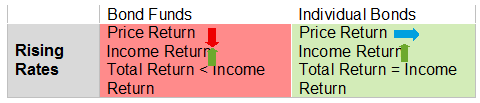
But trading by bond fund managers can generate permanent losses, not just paper losses. Table 2 shows the impact of the differences in price return for individual bonds and bond funds when rates rise. Instead of earning the coupon interest and redeeming the principal at maturity with an individual bond, bond fund investors could experience total return below the coupon interest because of the price loss recognized in the fund’s NAV.
Table 2 –Bond funds vs. individual bonds when rates rise
Seeing the Oncoming Risks
So how much risk is in bond funds if rates rise? Longer duration funds are more sensitive to rising rates, because the underlying bonds will lose more value than a fund with shorter duration. The 30-day SEC yield provides a good representation of a fund’s current income return. Funds with higher 30-day yield will be able to offset larger losses before total return goes negative.
Using data from Morningstar, we can estimate the price sensitivity to rising rates in corporate, government and municipal bond funds with short, intermediate and long-term maturities.2 Table 3 shows the average effective duration, measured in years, for funds in each of the categories listed (based on averages for over 900 funds sampled on the Morningstar site). Based on Table 3, if rates rise by 1% this year, an investor with $100,000 in an intermediate-term corporate bond fund would expect to see the value of their holdings drop by about $4,800. The bond fund’s managers will attempt to offset this loss, of course, by trading to get higher yields in the future, but the recognized price loss will be permanent.
This will come as a nasty surprise to any investor who thinks of bond-fund investments as safe.
Table 3 – Average effective duration
|
Time Horizon
|
Corporate
|
Government
|
Muni
|
|
Short Term
|
2.0
|
1.7
|
2.2
|
|
Intermediate Term
|
4.8
|
3.7
|
5.1
|
|
Long Term
|
9.7
|
13.5
|
6.7
|
Table 3 represents averages. Not every short-term corporate fund has a duration of exactly 2. There is a range for each category. Table 4 shows the maximum duration of funds in each category. Any investor who happens to own an intermediate-term corporate bond fund with the highest category duration of 7.3 will lose 7.3%.
2. Figures reported by Morningstar as of May 30, 2013
Table 4 – Highest duration within each category
|
Time Horizon
|
Corporate
|
Government
|
Muni
|
|
Short Term
|
3.8
|
4.1
|
2.8
|
|
Intermediate
Term
|
7.3
|
5.1
|
7.1
|
|
Long Term
|
14.7
|
19.8
|
8.4
|
On the other hand, an investor may own a bond fund that is at the shorter end of its duration category. Table 5 shows the minimum duration reported by Morningstar for these categories. In this case, an investor who happens to own the intermediate-term corporate bond fund with the shortest duration of 2.5 would suffer a decline of only 2.5% – not good but not as bad as the average.
Table 5 – Lowest duration within each category
|
Time Horizon
|
Corporate
|
Government
|
Muni
|
|
Short Term
|
0.8
|
0.8
|
0.3
|
|
Intermediate Term
|
2.5
|
1.5
|
3.2
|
|
Long Term
|
7.0
|
7.7
|
4.8
|
Protecting principal
Given the damage from the small rise in interest rates in May, we hope investors will now take note of the risk that is embedded in their bond funds. Thirty-plus years of declining rates have masked the erosive effect rising rates has on bond fund returns. The inability to protect principal in a bond fund leads to negative returns when rates rise.
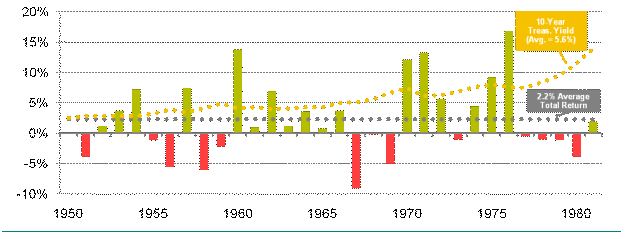
During the rising-rate period from 1950 to 1981, shown in Figure 1, several negative return years and a total return of 2.2% caused the intermediate-government bond index (a common bond fund benchmark) to lag individual bonds. Individual bonds during the same time period returned an average coupon of 5.6%. This 3 percentage-point improvement, compounded over 31 years, leads to a significant advantage for investors. For example, $10,000 invested at 2.2% compounded over the period results in an ending value of $19,633 in 1981, whereas $10,000 invested at 5.6% results in an ending value of $54,148 (2.75 times more money).
Figure 1 - Losses for bond funds during rising rates3
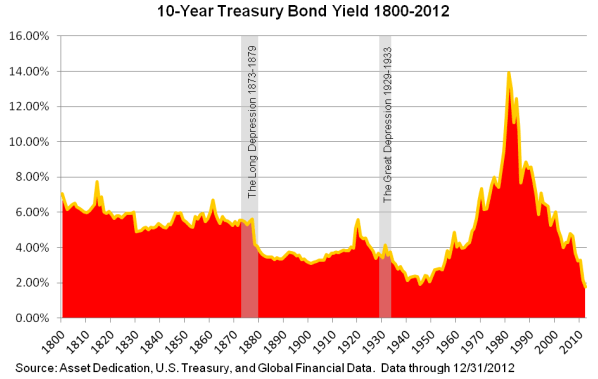
The best way to avoid a foreseeable loss of principal is to sell bond fund holdings while interest rates are still historically low. Figure 2 shows yields on the 10-year Treasury back to 1800. Clearly, from an historical perspective, interest rates are very low (at 1.8%, 2012 saw the lowest interest rates ever). No one should infer interest rate predictions, however. In a scenario comparable to Japan’s “lost decade,” interest rates can stay low and flat for many years.
Figure 2
Positive price returns from falling interest rates are key for bond funds to produce positive total returns. The opportunity for 30 more years of falling rates is very remote. The scenario for rising rates, even just to 3% on the 10-year Treasury bond, is much more likely. Tables 3, 4 and 5 illustrate how much a 1% rise in interest rates across the yield curve would hurt bond fund investors in the average, worst and best cases.
No one knows how likely a 1% interest-rate rise would be in any given year. But with little upside potential in bond funds and some clear risks, individual bonds have a distinct advantage for investor’s so-called safe money going forward. The simple fact that individual bonds can protect principal makes them a natural alternative to bond funds.
As Kenny Rogers said in his song “The Gambler,” “know when to hold ‘em and know when to fold ‘em.” For bond fund investors, now is a good time to “fold ’em” and protect gains made while rates were falling by shifting the proceeds into predictable individual bonds. Keeping fixed-income allocations in bond funds rather than individual bonds is a bad bet in 2013.
Stephen J. Huxley is chief investment strategist at Asset Dedication and professor of analytic modeling at the University of San Francisco. Jeremy Fletcher, CFA is the director of investments and portfolio risk management at Asset Dedication. Brent Burns is the president of Asset Dedication. Asset Dedication, LLC is a registered investment adviser located in Mill Valley, CA.
3. The 10-year Treasury index is used as a proxy for bond funds.
Read more articles by Stephen J. Huxley, Jeremy Fletcher and Brent Burns