Advisor Perspectives welcomes guest contributions. The views presented here do not necessarily represent those of Advisor Perspectives.
Efficient market adherents claim it is impossible to outperform the stock market over the long term. Although their principles are the foundation of modern investment theory, other compelling models, including the one I propose here, reveal that precisely the opposite is true, supporting the thesis that markets are highly inefficient.
Challenging the Efficient Market Hypothesis
Dow Theory, an investment philosophy based upon the research of Charles Dow in the late 19th century, contends that the stock market is engaged in a perpetual cycle that moves prices back and forth between undervaluation and overvaluation. According to Dow Theory, secular trends, which typically last from 10 to 20 years, begin when multiples are compressed and gradually drive prices to overvalued extremes, after which the trend reverses and drives them back to undervalued extremes, eliminating the speculative excesses that were introduced by the preceding growth phase. Within secular trends, there are cyclical trends that typically last from two to five years. These also engage in their own smaller cycles, moving higher and lower for several years at a time as the dominant secular current gradually engenders multiple compression or expansion over the course of a decade or more.
Many investors and traders have consistently outperformed the market over the long term, such as Warren Buffett, but in order to effectively prove that markets are inherently inefficient, it is necessary to create a similarly successful, purely mechanical trading system that generates reliable market timing signals based strictly upon the analysis of market data. Such a system needs to analyze a large basket of data, including fundamentals such as valuations, technical indicators such as momentum, market participant sentiment and market internals such as breadth and volume.
In order to be judged successful, the system needs to identify the vast majority of cyclical trend inflection points (i.e., when an investor should get in or out of the market) while generating a minimal number of incorrect signals. Not only is such a system possible, but I have implemented a rule-based software program that has successfully identified 92% of the cyclical trend inflection points from 1940 to 2010 while producing only four incorrect signals.
A mechanical system that identifies market inefficiencies
My system is relatively simple and based upon the fundamental tenet of Dow Theory that claims stock prices are continually moving between areas of undervaluation and overvaluation. While secular trends engender multiple expansion and compression during the course of decades, their component cyclical trends do so on a smaller scale over the course of two to five years. Therefore, the goal of the system is to identify these cyclical valuation extremes, along with the market behavior that suggests the trend is in the process of reversing.
In order to evaluate cyclical trends, my system produces a Cyclical Trend Score (CTS) that provides a quantitative measure of bullishness or bearishness. Generated scores range from -100 to +100; where a reading near 100 indicates the likely presence of a cyclical low, while a reading near -100 suggests the development of a cyclical peak.
The CTS is a composite of scores that analyze specific market characteristics such as valuation, momentum, sentiment and internals. I will review the use of each of these data to demonstrate how they assist in the identification of highly probable cyclical trend inflection points.
The valuation component score
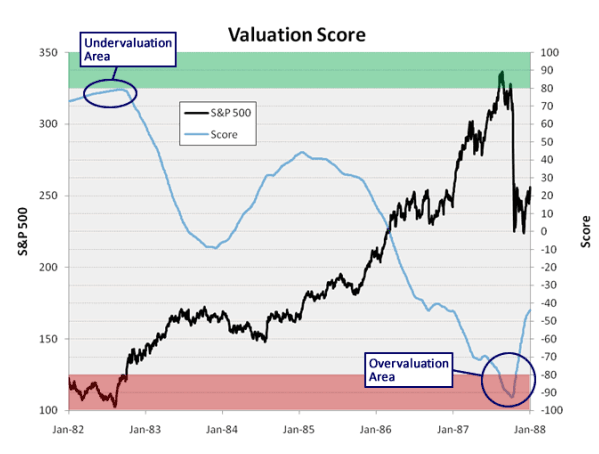
The valuation component score identifies areas of cyclical overvaluation and undervaluation relative to the core valuation of the dominant secular trend. Since secular trends gradually expand and compress multiples over long periods of time, the notions of overvaluation and undervaluation from a cyclical perspective are relative and depend upon the current state of the secular trend.
For example, coming out of the terminal phase of a secular bear market, market multiples are typically in the single digits, so an initial cyclical advance that expands valuations into the teens could easily result in an overvalued condition. Cyclical rallies in mature secular bull markets, however, may need to drive multiples well above 20 before an overvalued state is achieved. The core valuation for the secular environment can be approximated with a simple moving average, after which any number of standard mathematical tools, such as a Gaussian distribution, can be employed to identify cyclical valuation extremes, providing the basis for calculating the cyclical valuation score. The valuation score generated by my program is displayed below during the early stage of the secular bull market that began in 1982.

The price oscillator score
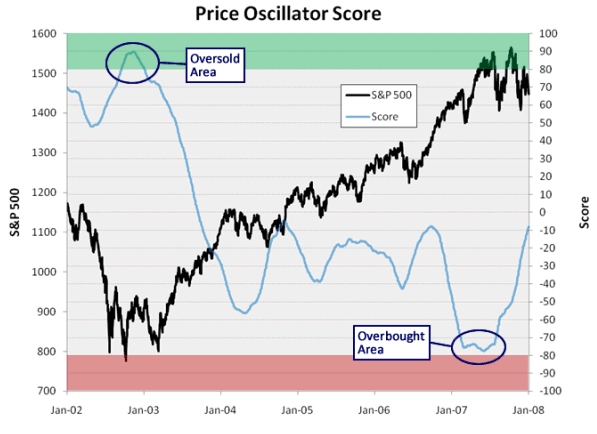
The next component score is based on a technical indicator known as a price oscillator, which measures trend momentum and characterizes extreme price movements. Using a standard technical indicator, such as the Relative Strength Index, with a sufficiently long time period, my system identifies cyclical overbought and oversold extremes, which, along with valuation extremes, develop at highly probable cyclical trend inflection points. The following chart displays the price oscillator score generated by my system during the current secular bear market from 2000.
The sentiment component score
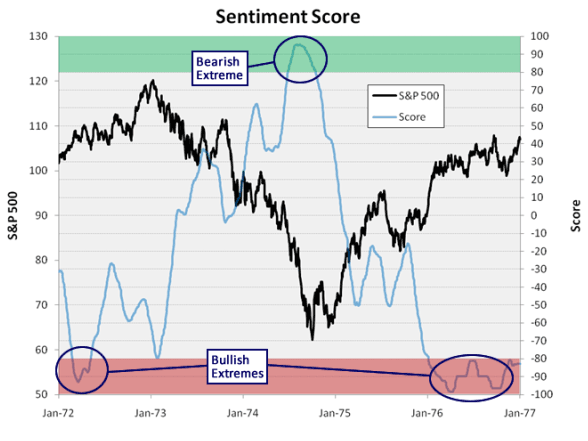
The sentiment component score measures market participant psychology, as characterized by data such as Investors Intelligence survey responses, and identifies areas of bullish and bearish extremes, which also tend to occur at long-term inflection points. The sentiment score generated by my system is displayed below during the 1970s secular bear market.
Internal component scores
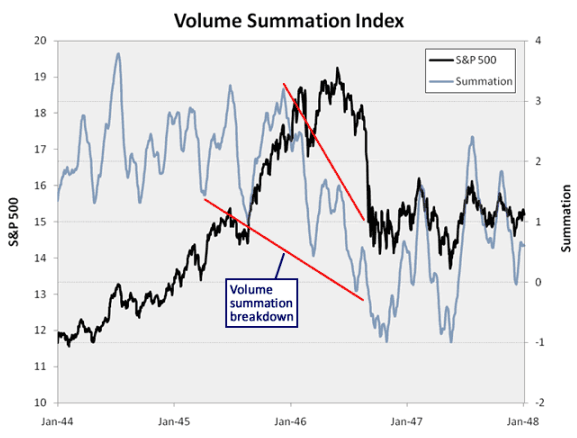
Finally, broad market internal component scores signal the development of cyclical trend inflection points when the behavior of volume and breadth diverges materially from that of the market. For example, the following chart displays the breakdown in volume that preceded the cyclical peak in 1946.
Combining the scores
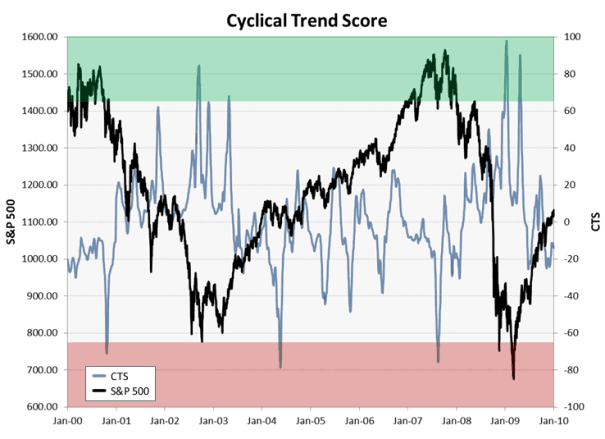
Individually, each component score assesses the health of the cyclical trend with respect to a specific characteristic, but only when the component scores are combined do they facilitate the highly reliable identification of cyclical trend inflection points. In order to generate the composite CTS, the component valuation, momentum, sentiment and internal scores are combined via a weighted summation. The following chart displays the resultant CTS during the first 10 years of the secular bear market from 2000.
Every time the CTS moved into buy or sell territory, denoted by the green and red areas on the chart above, a potential cyclical trend inflection point was identified. Most CTS signals result in the generation of a confirmed cyclical trend buy or sell signal, but some do not. For example, the decline into sell territory in 2004 did not produce a sell signal because the cyclical uptrend from 2002 was still so young. Since cyclical uptrends rarely last less than 24 months, any sell signals that occur in young bull markets are considered invalid. In order for a CTS signal to subsequently produce a confirmed inflection point signal, the cyclical trend in progress must be of sufficient duration and it must exhibit follow-through in the opposite direction after the CTS has left signal territory. Of the 43 CTS signals produced since 1940, 28 resulted in the generation of confirmed buy or sell signals.
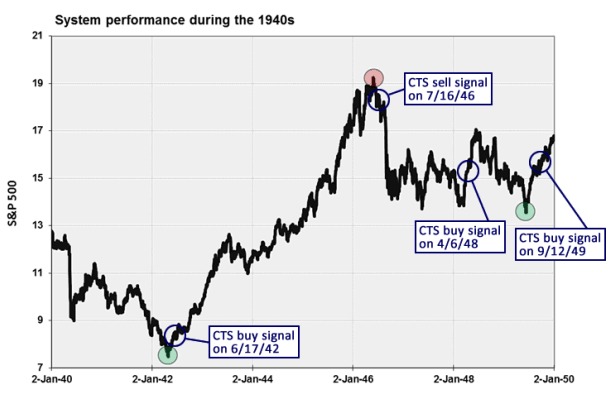
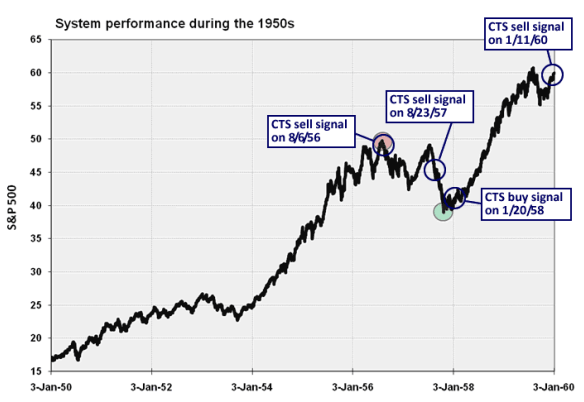
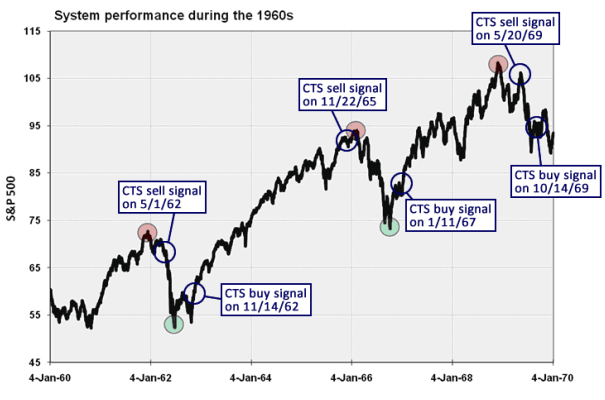
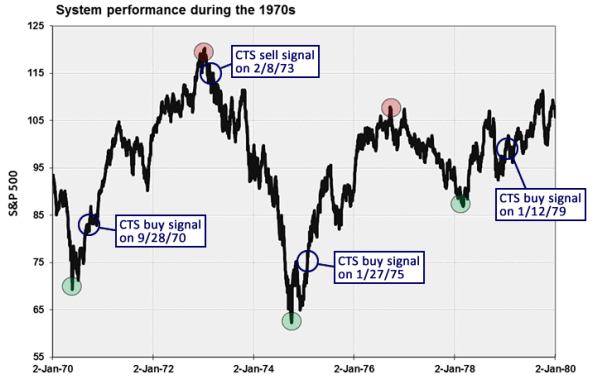
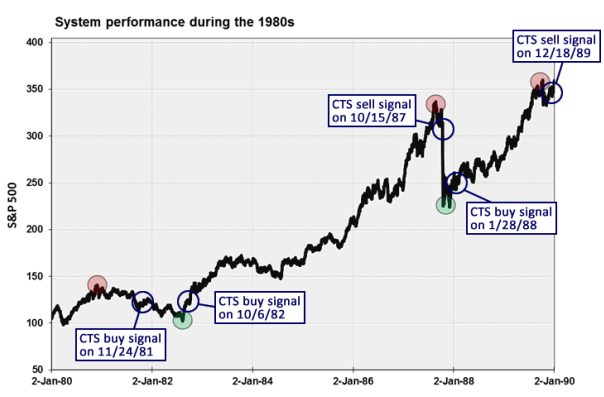
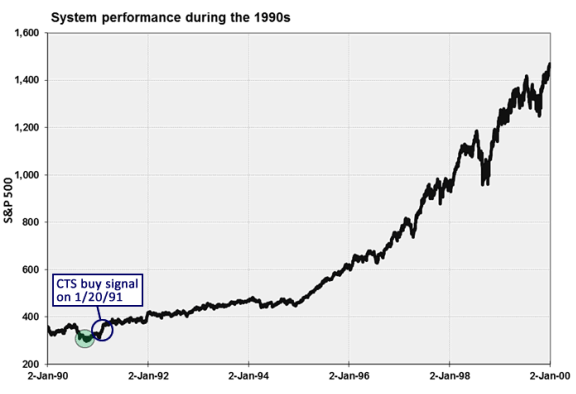
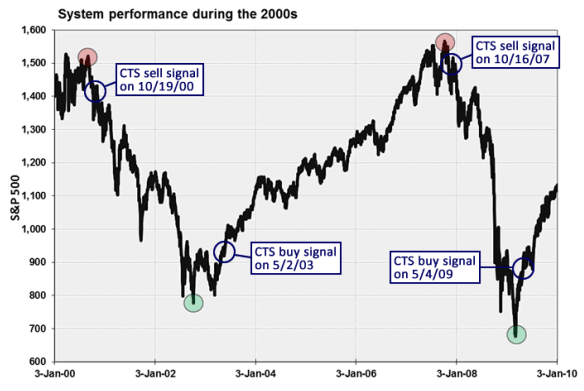
With respect to overall accuracy, the CTS trading system performed exceptionally well when it was back-tested using historical data from 1940 to 2010, identifying 23 of the 25 cyclical trend inflection points while producing only four incorrect signals – in April 1948, January 1960, October 1969 and November 1981. The following series of graphs displays all 28 signals grouped by decade.
Admittedly, my system operates in a straightforward algorithmic manner. Indeed, anyone could implement such a system given the necessary time and inclination. The data is there; it is simply a matter of sitting down and developing the required depth of understanding.
Further, the benefits of employing a cyclical market timing strategy to improve long-term performance are obvious, especially during a secular bear market like we are experiencing now. Today’s secular bear began in 2000. From the peak in 2000 through 2010, the S&P 500 index produced a compound annual return of -1.9%, assuming the reinvestment of all dividends. That said, if the four cyclical trend trades suggested by the CTS signals had been executed, assuming the reinvestment of dividends and the application of the highest capital gains tax rate following each profitable trade, my system would have produced a compound annual return of 12.8%, which is an excellent return in any market environment, much less a severe secular bear.
Clearly, in a world with efficient markets, such results would be impossible. My system reliably identifies long-term inflection points because it analyzes both rational and irrational market participant behavior. Fundamental data drive long-term stock market trends, but so does human emotion, which can only be properly characterized by applying technical analysis to market data. Ultimately, efficient market theories fail because they ignore the omnipresent emotional component that fuels cyclical trend momentum, driving bull market prices to overvalued highs and bear market prices to undervalued lows.
Erik McCurdy is Senior Market Technician for the Prometheus Market Insight newsletter service, which provides daily, weekly and monthly forecasts for stocks, bonds, currencies, commodities and precious metals based upon technical and cycle analysis.
Read more articles by Erik McCurdy